Home Inspection Report Repairs in Florida: The Contractor's Guide
Serving Estero, Naples, Bonita Springs, Fort Myers, Fort Myers Beach, Sanibel.
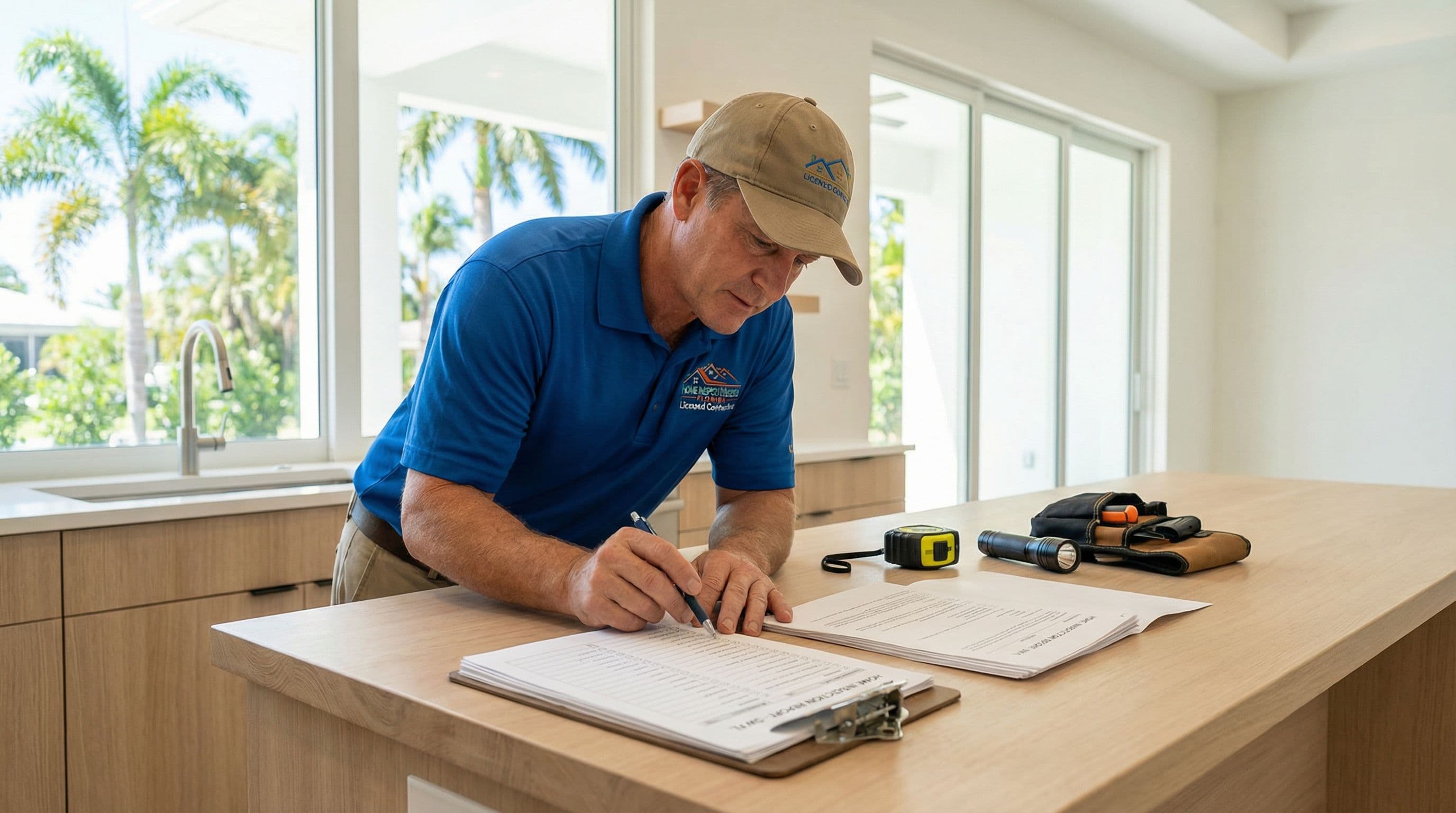
Every home inspection guide on the internet is written by an inspector or a realtor. They'll tell you what gets flagged. They won't tell you what it costs to fix, how long the work takes, or which items you can push back on — because they've never actually done the repairs.
We have. We're a licensed building contractor (CBC-1259887) who handles home inspection report repairs across Southwest Florida — Estero, Fort Myers, Naples, and Bonita Springs. We get these reports sent to us every week. Most of them look terrifying at first glance — 15, 20, sometimes 30+ flagged items. But once you sort through the findings, 80–90% of the items are routine repairs we knock out in a day or two.
This guide walks you through the process from a contractor's perspective: what the report actually covers, what the most common findings look like in SW Florida homes, what things cost, and how to get from “inspection report received” to “clear to close” without losing your mind.
What a Home Inspection Report Actually Covers
A standard home inspection in Florida evaluates the major systems and components of the property. The inspector isn't looking for cosmetic issues — they're checking whether things work, whether they're safe, and whether anything is likely to fail soon.
Here's what the report typically covers:
- Roof — shingle condition, flashing, penetrations, estimated remaining life
- Electrical — panel, wiring type, GFCI protection, outlets, fixtures
- Plumbing — supply lines, drain lines, fixtures, water heater, shut-off valves
- HVAC — age, function, ductwork condition, drainage
- Structure — foundation, walls, ceilings, framing
- Exterior — stucco, fascia, soffits, grading, drainage, lanai enclosure
- Interior — doors, windows, drywall, flooring, stairs, railings
- Safety — smoke detectors, CO detectors, handrails, GFCI, AFCI
Florida inspections often include two additional reports that don't exist in most other states: a four-point inspection (roof, electrical, plumbing, HVAC — required by many insurers) and a wind mitigation inspection (can lower your insurance premium by documenting hurricane-resistance features). Both generate findings that may need to be addressed.
Practitioner's note: The report looks worse than the reality. Inspectors are paid to find things — that's their job. A 25-item report doesn't mean the house is falling apart. It usually means there are 4–5 items that actually matter, 10–12 routine fixes, and another 8–10 items that are informational or cosmetic. The trick is knowing which is which.
The Most Common Inspection Findings in SW Florida Homes
After years of handling these reports, we see the same findings over and over. Florida's climate does specific things to homes — humidity, salt air, afternoon storms, and year-round UV exposure create a predictable set of problems.
For a deeper look at each finding with individual cost ranges, see our full breakdown: 10 most common home inspection findings in Southwest Florida.
Here's the quick version of what we see most:
Electrical Issues (~19% of reports)
Missing GFCI outlets in wet areas is the single most common finding. Florida code requires GFCI protection in kitchens, bathrooms, garages, laundry rooms, and exterior outlets. Older homes often have standard outlets in these locations. Other common flags: outdated panels (Federal Pacific, Zinsco), double-tapped breakers, missing junction box covers, and reversed polarity on outlets.
Window and Door Items (~18% of reports)
Failed window seals (fogged double-pane glass), missing or damaged weather stripping, doors that don't latch properly, and sliding glass door tracks that are worn or corroded. In SW Florida, the salt air accelerates hardware corrosion — door hinges, lock mechanisms, and window operators degrade faster here than anywhere inland.
Plumbing Concerns
Dripping faucets, running toilets, aging supply lines (especially polybutylene or galvanized), missing shut-off valves, and water heater issues. Hard water mineral buildup is nearly universal in Lee and Collier County homes. We also see a lot of improper drain connections under kitchen sinks — the kind of thing a previous owner “fixed” themselves.
Roof Findings
Cracked or missing shingles, damaged flashing around penetrations (vents, pipes), lifted edges, and aging. Florida insurers are strict about roof age — most won't write a new policy if the roof is over 15–20 years old, depending on the material. Roof replacement is typically outside handyman scope (you need a licensed roofing contractor), but many minor roof-related items — sealant, flashing repairs, soffit damage — are things we handle.
Exterior and Screen Enclosures
Stucco cracks, rotted fascia boards, deteriorating soffits, failed caulking around windows and penetrations, and damaged lanai screens. Nearly every SW Florida home has a screen enclosure, and nearly every inspection report flags something about it — torn panels, bent frames, worn spline, screen door hardware. These are routine screen repairs for us.
Safety Items
Missing or expired smoke detectors, missing carbon monoxide detectors (required near sleeping areas since 2015), loose stairway handrails, missing anti-tip brackets on ranges, and improper bathroom ventilation. These are usually inexpensive fixes but inspectors flag every single one.
What a Licensed Handyman Can Fix (The 80–90%)
This is the part that surprises most homeowners. You don't need five different contractors to handle an inspection report. A licensed handyman handles the majority of it in one or two visits.
Here's what falls squarely in our wheelhouse:
- Electrical: GFCI outlet installation, fixture replacement, cover plates, outlet repairs, ceiling fan installation
- Plumbing: faucet replacement, toilet repairs, supply line replacement, shut-off valve installation, garbage disposal replacement
- Drywall: cracks, holes, water stain patches, texture matching
- Doors: alignment, hardware replacement, weather stripping, threshold adjustment, deadbolt installation
- Windows: hardware repair, re-caulking, screen replacement, lock mechanism replacement
- Screens: rescreening panels, frame repair, spline replacement, screen door hardware
- Exterior: fascia board replacement, soffit repair, stucco patching, pressure washing, exterior caulking
- Painting: interior and exterior touch-ups, trim, fascia
- Safety items: smoke detectors, CO detectors, handrails, anti-tip brackets, GFCI upgrades
One crew, one visit, everything checked off. That's the difference between hiring a licensed general handyman and coordinating a plumber, electrician, painter, and carpenter separately.
What Needs a Specialist (The Other 10–20%)
We're honest about what falls outside our scope. Some items on an inspection report need a specialist — and a good contractor tells you that upfront instead of guessing.
- Full roof replacement — licensed roofing contractor required
- HVAC system replacement — licensed HVAC contractor required
- Major plumbing rerouting — whole-house repipe, sewer line replacement
- Structural issues — foundation cracks, load-bearing wall problems (structural engineer first)
- Active mold remediation — certified mold remediation company
- Termite damage — pest control company for treatment, then we handle the wood repairs
- Major electrical panel replacement — master electrician for full panel swaps
When we review your inspection report, we separate everything into “we handle this” and “you need a specialist for this.” No ambiguity. You know exactly who handles what before any work starts.
Practitioner's note: The items that need specialists are also the items that take the longest to schedule. If your report flags a roof issue or HVAC concern, get those specialists on the calendar immediately — don't wait until the handyman items are done. We can work in parallel. The handyman work doesn't depend on the roof or HVAC being done first.
How Much Do Home Inspection Repairs Cost in SW Florida?
This is the question everyone asks first. The honest answer: it depends entirely on the report. But after handling hundreds of these, we can give you realistic ranges.
| Report Severity | Typical Items | Cost Range |
|---|---|---|
| Light (8–10 items) | GFCI outlets, smoke detectors, caulking, minor hardware | $800–$1,500 |
| Moderate (15–20 items) | Plumbing fixtures, electrical, doors, exterior paint, screens | $2,000–$4,000 |
| Heavy (25–30+ items) | Multiple systems, fascia/soffit, drywall, windows, safety items | $4,000–$8,000+ |
For a detailed breakdown by repair category with individual line-item costs, see our home inspection repair costs guide.
One thing worth noting: hiring one contractor for the whole list is almost always cheaper than coordinating three or four. We mobilize once, set up once, and work through the list efficiently. When you hire a plumber for the plumbing, an electrician for the electrical, and a painter for the touch-ups, you're paying three service call fees, three setup charges, and three minimum billing increments. The math adds up fast.
Who Pays for Home Inspection Repairs?
Short answer: it's negotiated between buyer and seller, usually through their agents.
In Florida, two contract types determine the starting point:
- FAR/BAR Standard Contract: The seller is responsible for repairs up to the Repair Limit, which defaults to 1.5% of the purchase price. If the repair costs exceed that limit, the deal can be renegotiated or canceled.
- “As Is” Contract: More common in Florida. The seller has no obligation to make repairs. But the buyer gets an inspection period to evaluate the property and can cancel for any reason during that window. In practice, buyers often request specific repairs or a closing credit even under an “as is” contract — and sellers often agree to keep the deal alive.
We don't get involved in the negotiation. But we do provide clear, itemized estimates that both sides can use at the negotiating table. A detailed line-item quote from a licensed contractor carries more weight than a handwritten guess from someone's uncle.
For buyers navigating this for the first time, we wrote a full walkthrough: home inspection repairs for first-time homebuyers.
The Process: From Report to Repair to Closing
Here's exactly how it works when you send us your inspection report.
- Send us the report. Email it, text a photo, upload it through our quote form. We accept any format.
- We review every item within 24 hours. We go through the report line by line and separate the items into three categories: what we handle, what needs a specialist, and what's informational (no action needed).
- You get an itemized quote. Every repair is listed with a price. No lump sums, no vague ranges. You see exactly what each item costs and can share the quote with your agent, the other party, or the title company.
- We schedule and knock it out. Most reports take 1–2 visits. We bring everything we need — one crew handles electrical, plumbing, drywall, painting, screens, doors, and safety items. No juggling subcontractors.
- You close on time. We provide documentation of completed repairs for the transaction file. Photos, descriptions, our license number on everything. The kind of paperwork that satisfies title companies and lenders.
The whole process — from receiving the report to completing repairs — typically takes 5–10 days. We understand closing deadlines. We've been on the receiving end of the “we close in 8 days, can you get this done?” call more times than we can count.
For a prioritized approach to which items to tackle first, see our home inspection repair checklist.
For Realtors: Why Your Clients Love Working With Us
We work with realtors across Lee and Collier counties. Here's why they keep sending us reports.
- One call handles 80–90% of the list. You don't need to coordinate a plumber, electrician, painter, and handyman. We cover all of it in one or two visits.
- Licensed and documented. Our license (CBC-1259887) means the work is done to code, properly documented, and defensible at closing. Title companies and lenders don't question our paperwork.
- Fast turnaround. 24-hour quote. Repairs typically completed within a week. We know how closing timelines work — we don't let the repair schedule blow up your transaction.
- Clear communication. We send you the itemized quote so you can use it in negotiations. We document every repair with photos. Your clients — buyers or sellers — know exactly what was done and what it cost.
For our full realtor partnership page, including how to refer clients directly, see that page.
Practitioner's note: The best realtors we work with send us the report the same day it comes in. That gives us the most runway to quote, schedule, and complete the work before the inspection period expires. The ones who wait until day 8 of a 10-day inspection period are always scrambling. Send it early.
What You Can Push Back On
Not everything on an inspection report needs to be fixed before closing. Inspectors flag everything — that's their job. But some findings are informational, cosmetic, or maintenance recommendations rather than defects that need immediate repair.
Items that typically don't need to be addressed for closing:
- Cosmetic cracks in stucco or drywall (no structural significance)
- Minor paint wear or fading
- Normal wear on carpet or flooring
- Recommendations for future maintenance (e.g., “consider replacing HVAC in 3–5 years”)
- Landscaping or drainage grading suggestions
- Items that meet the code in effect when the home was built (grandfathered)
Items that typically do need to be addressed:
- Active safety hazards (exposed wiring, no GFCI in wet areas, missing smoke detectors)
- Active leaks (roof, plumbing, windows)
- Conditions that prevent insurance binding (roof age, electrical panel type)
- Conditions that prevent loan funding (structural issues, active infestations)
- Code violations that affect health or safety
If you're a seller deciding what to fix before listing, our pre-listing inspection repairs guide walks through the decision framework.
Why Your Inspection Repair Contractor Needs to Be Licensed
This matters more for inspection repairs than almost any other type of handyman work. Here's why.
When a buyer's agent, title company, or lender reviews the repair documentation, they're looking for proof that the work was done correctly and by someone qualified. An invoice from an unlicensed handyman doesn't carry the same weight as documentation from a licensed contractor.
In Florida, any contracting work exceeding $1,000 in total value requires a licensed contractor. Most inspection repair lists exceed that threshold easily. Add up GFCI outlets, plumbing fixtures, drywall patches, and exterior work — you're past $1,000 before noon. Working with an unlicensed operator on an inspection repair list exposes the homeowner to legal liability and can create complications at closing.
For a full breakdown of Florida licensing requirements, see our guide: licensed vs. unlicensed handyman in Florida.
Got an Inspection Report? Send It Over.
We'll review every item, separate what we handle from what needs a specialist, and get you an itemized quote within 24 hours. One call, one team, one or two visits — and you close on time.
Or upload your report and get a free quote.
Licensed (CBC-1259887). Family-owned since 2010. 475+ five-star reviews. Serving Estero, Fort Myers, Naples, and Bonita Springs.
Frequently Asked Questions
What are the most common home inspection repairs in Florida?
The most common items on Florida inspection reports are electrical deficiencies (missing GFCI outlets, outdated panels), plumbing concerns (aging supply lines, dripping fixtures, missing shut-off valves), roof issues (damaged shingles, flashing gaps), screen and lanai damage, exterior deterioration (stucco cracks, rotted fascia, failed caulking), and safety items (missing smoke detectors, loose handrails). Florida's humidity, salt air, and storm exposure cause these to appear far more often than in other states.
Who pays for home inspection repairs in Florida?
It depends on the contract. Under the standard Florida FAR/BAR contract, the seller covers repairs up to the Repair Limit (typically 1.5% of the purchase price). Under an "As Is" contract — which is more common in Florida — the seller isn't obligated to fix anything, but the buyer can cancel during the inspection period. In practice, most transactions involve negotiation: the seller agrees to fix certain items, offers a closing credit, or adjusts the price.
Can one contractor fix everything on a home inspection report?
A licensed handyman can typically handle 80–90% of the items on a standard report: electrical outlets, plumbing fixtures, drywall, doors, screens, painting, exterior trim, and safety items. The remaining 10–20% — full roof replacement, HVAC system replacement, major structural work, mold remediation — requires specialists. Starting with a licensed handyman saves time because they can identify what needs a specialist upfront instead of you coordinating multiple contractors.
How much do home inspection repairs cost in Florida?
It varies by report. A light report with 8–10 minor items typically runs $800–$1,500. A moderate report with 15–20 items across plumbing, electrical, and exterior categories falls in the $2,000–$4,000 range. Heavy reports with 25–30+ items can reach $4,000–$8,000. The only way to know is to send your report to a licensed contractor for an itemized estimate.
What repairs are mandatory after a home inspection in Florida?
Technically, no repairs are "mandatory" — a home inspection is informational, not pass/fail. But certain issues can kill a deal in practice: active roof leaks (insurance won't bind), electrical hazards, structural defects, active mold, and termite damage. Lenders may refuse to fund the loan and insurers may refuse to write a policy until these are resolved. Safety-related items like missing smoke detectors and GFCI outlets are also frequently required before closing.
How long do home inspection repairs take before closing?
Most reports can be completed in 1–2 visits over 1–3 days, depending on the scope. We typically turn around a quote within 24 hours of receiving the report and schedule the work within a week. The key is starting early — don't wait until two days before closing to address the repair list. If the report includes items that need specialists (roof, HVAC, mold), those have their own timelines and should be coordinated immediately.