Who Fixes Items From Home Inspection Reports?
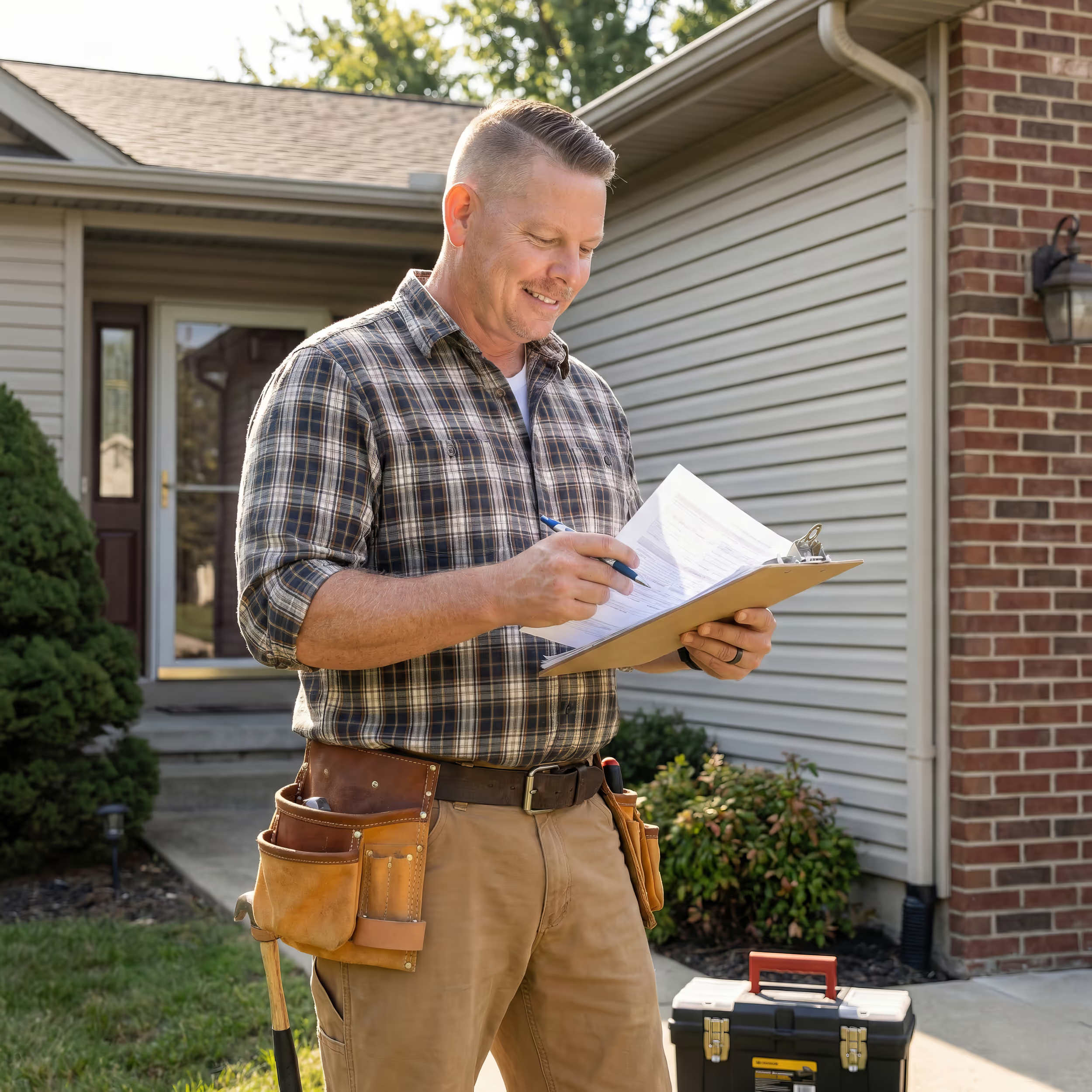
A licensed handyman handles 80-90% of typical home inspection report items — plumbing, electrical, drywall, painting, carpentry, and safety items. For major structural work, roofing, or full system replacements, you'll need a specialist. But for most reports, one licensed handyman is your best first call.
If that surprises you, you're not alone. Most people get an inspection report back, see 20-30 items across six different categories, and assume they need to hire six different contractors. A plumber for the faucets. An electrician for the outlets. A painter for the drywall. A separate guy for the screens.
That's four phone calls, four schedules, four invoices — and a closing date that's getting closer by the day.
There's a simpler way.
The Inspector Writes the Report. A Contractor Fixes It.
Start with who will not be doing the repairs: your home inspector. The inspector looks at the house and reports what they find. In Florida, they are not allowed to fix it. State law bars a home inspector from performing or offering to perform repairs on a home that the inspector or their company has prepared a home inspection report on (section 468.8319, Florida Statutes). The rule keeps the person who finds a problem separate from the person who is paid to fix it.
So once the report is in your hands, the repair work goes to a licensed contractor. If an item is unclear, ask the inspector what they saw and where. A good contractor will then confirm the cause on site before quoting the fix, and will tell you which items, if any, need a specialist. Working through the whole report this way, item by item, is what home inspection report repairs means in practice.
Types of Contractors for Home Inspection Repairs
Not every item on an inspection report requires the same type of professional. Here's who handles what — and when each one makes sense.
Licensed Handyman
Best for: The majority of inspection report items (80-90% of a typical report).
A licensed handyman covers the widest range of repair categories: plumbing fixtures, electrical outlets and switches, drywall, painting, carpentry, screens, doors, windows, safety items like smoke detectors and handrails, and more.
The advantage is straightforward — one call, one estimate, one team. You're not coordinating five different contractors or collecting five different invoices for the closing file.
In Florida, look for a state license. An unlicensed handyman can handle minor work under $1,000, but they can't pull permits or guarantee code compliance. Chad The Handyman holds license CBC-1259887 — a State of Florida Certified Building Contractor license — which means the work meets current code requirements and is backed by real insurance.
General Contractor
Best for: Major renovations or large structural projects found in the inspection.
If your report flags something that requires multiple subcontractors, permits for structural modifications, or a full remodel-level scope, a general contractor manages that process. Foundation issues, room additions, major structural work.
For a typical inspection report? A GC is overkill. You'll pay more for the overhead, and the timeline is longer. Most inspection reports don't need this level of firepower.
Licensed Plumber
Best for: Major plumbing issues only.
Re-piping the house, replacing a sewer line, fixing a main water line — that's plumber territory. If your inspector flags any of those, call a licensed plumber.
But here's the thing: most plumbing items on inspection reports aren't major. Dripping faucets, running toilets, garbage disposal replacements, fixture swaps, missing shut-off valves, water heater TPR valve issues — a licensed handyman handles all of these. We do it on nearly every inspection job.
Licensed Electrician
Best for: Panel upgrades, full rewiring, or aluminum wiring remediation.
If your report flags an electrical panel that needs replacement, aluminum branch wiring throughout the house, or a full rewire, you need a licensed electrician.
Most electrical items on inspection reports, though, are much simpler: missing GFCI outlets (the #1 most common electrical finding in Florida inspections), non-functioning outlets or switches, smoke and CO detector installation, ceiling fan repairs, light fixture replacements, double-tapped breakers. All of these fall within a licensed handyman's scope.
Roofing Contractor
Best for: Roof replacement or major structural roof repairs.
Roofing issues show up on about 20% of inspection reports. If yours needs a full replacement, significant shingle repair, or structural work on the roof deck, that goes to a roofer.
We handle the related items that often appear alongside roof findings: damaged fascia and soffit, flashing repairs, gutter issues, and water damage to interior ceilings and walls from past leaks.
HVAC Specialist
Best for: Full system replacement, compressor failure, or refrigerant issues.
An aging HVAC system at end of life or a failed compressor needs an HVAC specialist. But minor items — thermostat issues, filter changes, condensate drain line problems, duct concerns — don't require a $150/hour HVAC tech. A licensed handyman can address the simple stuff.
Why a Licensed Handyman Is Your Best First Call
Here's why starting with a licensed handyman makes more sense than hiring specialists for each category:
Widest range of coverage. Plumbing + electrical + carpentry + painting + fixtures + safety items = one contractor. According to industry data, 86% of home inspections find at least one issue. The most common findings — electrical (18.7%), plumbing (13%), doors needing adjustment (55% of homes), drywall damage, fixture problems — are all squarely in a handyman's wheelhouse.
One appointment, not five. You schedule once. One team shows up. They work through the list. You don't spend two weeks coordinating availability between a plumber, an electrician, a drywall guy, and a painter.
One invoice for the closing file. Your closing agent, your realtor, the buyer — they all need documentation. One invoice with completion photos is infinitely easier than tracking down paperwork from four different contractors.
Faster turnaround. Most inspection reports take 1-3 days to complete. When you're working against a closing deadline, that matters. Coordinating multiple specialists can stretch repairs over weeks.
Honest about limitations. A good licensed handyman tells you upfront what's beyond their scope. We handle what we can and point you toward the right specialist for the rest. No guessing, no overcommitting, no surprises.
Important: “Licensed” matters. In Florida, an unlicensed handyman is limited to casual work under $1,000 — and can't touch anything structural, anything requiring a permit, or any life-safety system. A licensed contractor like Chad (CBC-1259887) doesn't have those restrictions.
What a Licensed Handyman Can Fix From Your Inspection Report
Here's the quick-reference list. If your report includes any of these, a licensed handyman handles it:
Plumbing
- ● Dripping faucets and running toilets
- ● Garbage disposal replacement
- ● Fixture replacements (sinks, showerheads, supply lines)
- ● Missing shut-off valves
- ● Water heater TPR valve and strapping (Florida requirement)
- ● Slow drain clearing
- ● Caulking and sealing in wet areas
Electrical
- ● GFCI outlet installation (Florida's #1 inspection finding)
- ● Non-functioning outlets and switches
- ● Smoke and CO detector installation
- ● Ceiling fan repair or replacement
- ● Light fixture swaps
- ● Double-tapped breaker correction
- ● Cover plates for exposed junction boxes
Carpentry & Doors
- ● Door alignment and weatherstripping
- ● Handrail and guardrail installation (code requirement)
- ● Cabinet repair and adjustment
- ● Trim and molding repair
- ● Window hardware and screen replacement
- ● Deck and stair repairs
Drywall & Painting
- ● Drywall crack repair and patching
- ● Nail pop repair
- ● Interior painting and touch-ups
- ● Texture matching
Exterior
- ● Fascia and soffit repair (rotted wood replacement)
- ● Screen enclosure repairs
- ● Gutter repair and reattachment
- ● Exterior caulking and sealing
- ● Minor stucco patching
Safety Items
- ● Smoke and CO detectors
- ● Anti-tip brackets for ranges
- ● Handrails on stairs
- ● GFCI protection near water sources
- ● Water heater strapping
What Requires a Specialist
We're honest about what we don't do. If your report includes any of the following, you need a specialist — and we'll tell you that before we start, not after:
- Roof replacement or major structural roof repairs — goes to a licensed roofer
- Foundation work — needs a structural engineer evaluation and a foundation contractor
- Full HVAC system replacement — licensed HVAC company
- Main sewer line replacement or full re-pipe — licensed plumber
- Electrical panel replacement or full rewire — licensed electrician
- Mold remediation (if extensive) — licensed mold remediation company
- Termite treatment — licensed pest control (though we repair the wood damage after treatment)
- Pool or spa equipment — licensed pool contractor
The good news: these items make up maybe 10-20% of a typical inspection report. The other 80-90%? That's us.
How to Get Your Inspection Repairs Done
You've got the report. You know a licensed handyman handles most of it. Here's what happens next:
Step 1: Send Us Your Inspection Report
Email, text, or upload — we accept reports from any inspection company. Include your closing date so we can schedule around it.
Step 2: We Review Every Line Item
We identify what our team handles, what needs a specialist, and what's cosmetic. You get a detailed, itemized estimate within 24-48 hours.
Step 3: We Complete the Repairs
Our licensed team works through the approved list. Most reports are done in 1-3 days.
Step 4: Documentation for Closing
We provide a completion report with photos — ready for the buyer, the seller, re-inspection, or the closing file.
If anything on your report does need a specialist, we'll tell you. We've been doing this long enough to know the right people to call in Estero, Fort Myers, Naples, and Bonita Springs.
Read the full details on our home inspection report repairs page. If you're a realtor looking for a reliable repair partner, check out our realtor partnership program.
And if you want a prioritized breakdown of what items actually matter on your report, read our home inspection repair checklist.
Frequently Asked Questions
Can my home inspector fix the problems on the report?
Not in Florida. Under section 468.8319 of the Florida Statutes, a home inspector may not perform or offer to perform repairs on a home that the inspector or their company has prepared a home inspection report on. The one exception is a home warranty company that retains an inspector to make repairs under a warranty claim. The inspector reports what they find, and a licensed contractor quotes and makes the repairs.
Who should I call first when I get my inspection report?
Start with a licensed handyman. They handle the widest range of inspection items — plumbing, electrical, drywall, painting, carpentry, and safety items — and can identify upfront which items (if any) need a specialist. This saves you from coordinating multiple contractors and speeds up the repair timeline.
Can a handyman fix everything on a home inspection report?
Most of it, yes. A licensed handyman typically handles 80-90% of the items on a standard inspection report. The remaining 10-20% — major structural work, full roof replacement, complete HVAC system replacement, or main sewer line issues — require specialists. A good handyman will tell you exactly which items fall outside their scope.
Do I need a licensed contractor for home inspection repairs in Florida?
For anything requiring a permit — structural modifications, significant electrical or plumbing work — yes. Florida law requires a licensed contractor. For work under $1,000 that doesn’t touch structural elements, life-safety systems, or require permits, an unlicensed handyman can technically do it. But for inspection report repairs, you want a licensed contractor who can document code-compliant work for the closing file.
How long do inspection repairs usually take?
Most inspection reports take 1-3 days to complete, depending on the number of items and their complexity. Working with one licensed handyman instead of multiple specialists significantly reduces the timeline — you’re coordinating one schedule instead of four or five.
What’s the difference between a handyman and a general contractor for inspection repairs?
A handyman handles a wide range of smaller-to-medium repairs across multiple trades — the kind of items that fill a typical inspection report. A general contractor manages larger projects requiring multiple subcontractors, permits, and extended timelines. For a standard inspection report with 15-30 items, a licensed handyman is faster, more cost-effective, and covers everything you need. For major structural work or full remodels, a GC is the right call.
Got Your Inspection Report?
We'll review every item, tell you what we handle and what needs a specialist, and give you a clear, itemized estimate — no obligation.
Or send your report for a free estimate.
Licensed (CBC-1259887). Insured. Family-owned since 2010. 450+ five-star reviews.