Home Inspection Repairs for First-Time Homebuyers: What to Expect
Serving Estero, Naples, Bonita Springs, Fort Myers, Fort Myers Beach, Sanibel.
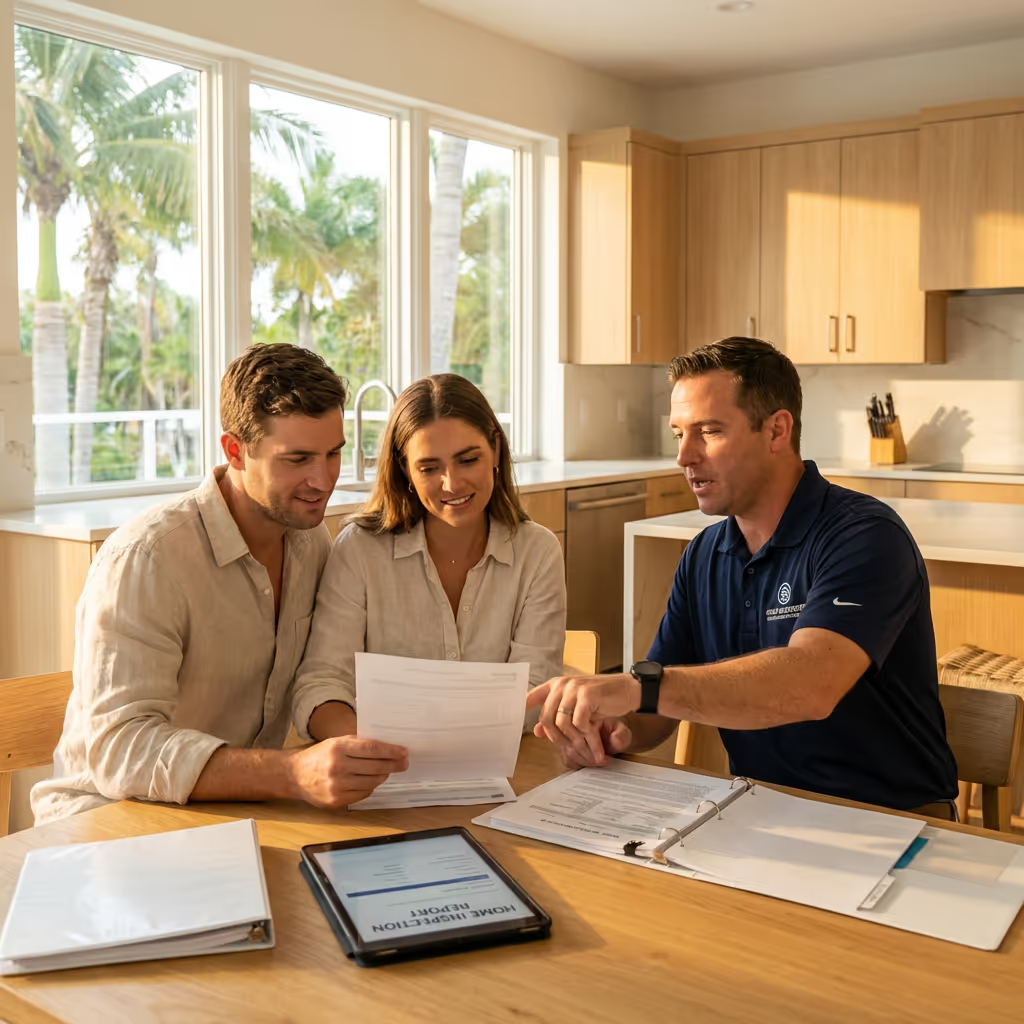
You just made an offer on your first home. The seller accepted. You're excited, nervous, and already picturing where the couch goes.
Then the home inspection report arrives. It's 35 pages. It lists 42 items. Words like “safety hazard,” “code violation,” and “recommend further evaluation” show up over and over. Your stomach drops.
Take a breath. That report is doing exactly what it's supposed to do — documenting the condition of the home so you can make informed decisions. But reading it without context can make any house look like a disaster. It almost never is.
Most of what you're reading about home inspection repairs online was written by realtors and mortgage companies. They give good general advice, but they're not the ones who show up and actually do the work. We are. Our team at Chad The Handyman handles home inspection report repairs across Southwest Florida every single week — in Estero, Naples, Fort Myers, and Bonita Springs. We've read hundreds of these reports and fixed thousands of line items.
This post is the contractor's guide. What actually matters, what doesn't, what it costs, and how to get it all done before your closing deadline.
What Is a Home Inspection Report (and Why It Looks Scary)
A home inspection report is a written evaluation of the property's physical condition. A licensed inspector walks through the entire house — roof to foundation, electrical panel to kitchen faucet — and documents what they find. Their job is to be thorough, which means they note everything. Every scuff, every aging component, every minor oddity.
That's why the report looks scary. A 40-item report doesn't mean 40 things are wrong with the house. It might mean 6 things need fixing, 10 should be addressed within the next year, and 24 are informational observations — the inspector documenting that yes, the roof is 12 years old, and yes, the water heater is reaching the end of its expected lifespan.
As first-time buyers, you don't have the frame of reference to know what's normal and what's a red flag. Every house has a list. A brand-new construction home has a list. The question is never “are there findings?” — the question is “are any of these findings deal-breakers, and what will it cost to address the rest?”
From our experience: About 80% of the inspection reports we see have a total repair cost between $1,500 and $5,000. That covers the real defects — safety items, functional repairs, and code issues. The other 20% of the report is usually informational notes that don't require action before closing.
Which Repairs Actually Matter? How to Prioritize Your Report
Not every line item on your home inspection report carries the same weight. The fastest way to stop feeling overwhelmed is to sort every finding into one of three tiers.
Tier 1: Must-Fix — Safety Hazards and Code Violations
These are the items that affect your ability to close. Lenders may refuse to fund the mortgage. Insurance companies may decline to bind the policy. And honestly, you don't want to move into a house with active safety issues.
- Active water leaks — Under sinks, around toilets, at the water heater, in the ceiling. A plumbing leak is never cosmetic.
- Electrical safety issues — Missing GFCI outlets near water, exposed wiring, double-tapped breakers, non-functioning smoke detectors. These show up on almost every Florida inspection.
- Structural concerns — Significant foundation cracks, roof damage, compromised load-bearing walls. These are rare but serious.
- Code violations — Work that was done without permits, missing hurricane straps, improper electrical panel configurations.
- Mold or active water intrusion — In Florida's humidity, mold can develop on wet surfaces within 24-48 hours. Mold remediation should happen before you move in.
Tier 2: Should-Fix — Functional Defects
These items aren't dangerous, but they're broken. Things that don't work as designed. They're fair game for your repair request to the seller.
- Running toilets, dripping faucets, slow drains
- Non-functioning outlets, switches, or ceiling fans
- Doors that don't close properly, broken locks
- Damaged screens, rotted fascia or soffit
- Cracked tiles in wet areas, failed grout and caulk
- Garage door opener issues, weatherstripping gaps
Tier 3: Can-Wait — Cosmetic and Maintenance Notes
These are observations. The inspector is being thorough. They're not telling you the house is broken — they're telling you what to plan for over the next few years.
- Paint scuffs, nail holes, minor drywall imperfections
- Aging but functional appliances or systems
- Cosmetic caulk discoloration
- Maintenance reminders (change HVAC filters, clean dryer vent, service the AC)
For a complete prioritized checklist you can print and reference as you go through your report, read our home inspection repair checklist.
Common Inspection Repairs in Florida Homes
Florida homes have their own set of recurring inspection findings. If you're buying in Southwest Florida for the first time — whether you're relocating from up north or a local renter making the jump to ownership — here's what shows up on almost every report we work from.
Electrical Issues
Missing GFCI outlets are the single most common finding on Florida inspection reports. Florida building code requires ground-fault circuit interrupter protection in kitchens, bathrooms, garages, all outdoor outlets, laundry rooms, and anywhere within six feet of water. Homes built before 2014 almost always fall short somewhere. We install GFCI outlets on every inspection repair job we do. It's that consistent.
Beyond GFCIs, we regularly see non-functioning smoke detectors, missing cover plates, double-tapped breakers, and reversed polarity outlets. The electrical panel itself sometimes raises flags — particularly Federal Pacific and Zinsco panels, which some insurers refuse to cover.
Plumbing
Running toilets, dripping faucets, and slow drains are the bread and butter of plumbing findings. In older homes, we see corroded supply lines, water heaters without proper TPR valve discharge pipes, and plumbing leaks under sinks that have been dripping long enough to cause cabinet damage. Water heater strapping is also a Florida requirement — the unit must be secured to the wall for hurricane safety — and missing straps show up frequently.
HVAC System
Florida's HVAC systems work harder than anywhere else in the country. An AC unit running nearly year-round wears out faster, and inspectors pay close attention to the system's age, condition, and performance. A system that's 12-15 years old may still work but will likely be flagged as approaching end of life. Clogged condensation drain lines are another frequent finding — when they back up, water ends up on your ceiling.
Mold and Moisture
This is the big one that scares first-time buyers more than anything else. And it should be taken seriously — but not every dark spot is toxic mold. In Florida, mild surface mold in bathrooms with poor ventilation is common and treatable. Active mold growth behind walls or in the attic from a leak is a different situation that requires professional mold remediation before closing.
Termite and Wood-Destroying Organisms
Florida requires a separate termite inspection (WDO report) for most real estate transactions. If active termites are found, treatment is required before closing. We don't treat termites, but we repair the wood damage they leave behind — damaged fascia, soffit, door frames, and structural trim.
4-Point and Wind Mitigation Inspections
Florida insurance companies require a 4-point inspection for homes over a certain age (usually 20-30 years, varies by insurer). This examines four systems: roof, electrical, plumbing, and HVAC. If your 4-point reveals issues, your insurer may require repairs before they'll write a policy. A wind mitigation inspection documents hurricane-resistance features — roof shape, connections, shutters, opening protection — and can earn you significant insurance discounts. Both are separate from your general home inspection, but the findings often overlap.
Who Pays for Home Inspection Repairs — Buyer or Seller?
This is one of the most confusing parts of the process for first-time buyers. The answer depends entirely on your contract.
Standard Florida Contract (FAR/BAR)
Under the standard Florida residential contract, the seller is obligated to deliver the home with its major systems in “Working Condition” — meaning they perform their intended function. The contract includes a Repair Limit, which is typically set at 1.5% of the purchase price. If the cost to bring everything into working condition falls under that limit, the seller pays. If it exceeds the limit, both parties negotiate — the seller can agree to pay more, the buyer can agree to cover the difference, or either side can walk away.
“Cosmetic Conditions” are explicitly excluded from the seller's repair obligations in a standard contract. That means paint, minor scratches, worn carpet, and similar items are the buyer's responsibility after closing.
As-Is Contract
As-is contracts are very common in Florida, especially in competitive markets. Under an as-is contract, the seller has no obligation to make any repairs. But you still have your inspection contingency — you can inspect the property, and if you don't like what you find, you can cancel during the inspection period and get your earnest money back. Many buyers in as-is deals negotiate a closing credit instead of asking the seller to make repairs. The seller writes you a check at closing, and you hire your own contractor after you move in.
Negotiation Tips From the Contractor Side
Your real estate agent handles the negotiation, but here are a few things we've learned from seeing how repair requests play out:
- Be specific. “Replace missing GFCI outlets in kitchen and both bathrooms” is better than “fix electrical issues.” The more specific your repair request, the less room for disagreement.
- Stick to safety and function. Asking the seller to repaint a bedroom or replace dated light fixtures weakens your position. Focus on items that are broken or hazardous.
- Get a real estimate. Attaching a contractor's estimate to your repair request gives the seller a concrete number to respond to, not a vague list of demands.
- Consider a closing credit. Sometimes it's better to take a credit and hire your own contractor after closing. You control the work quality, the timeline, and the contractor selection.
FHA, VA, and Conventional Loans: What Your Lender Requires
Your lender has their own set of property requirements, separate from the inspection report. If the home doesn't meet these standards, the lender won't fund your mortgage — regardless of what the buyer and seller agree to.
FHA Loan Requirements
FHA loans have the strictest property standards. The home must meet HUD's Minimum Property Requirements (MPRs), which include:
- No peeling or chipping paint (especially in homes built before 1978)
- All major systems must be functional (HVAC, plumbing, electrical)
- No safety hazards (handrails required on stairs, no exposed wiring)
- Adequate roof life remaining (typically 2+ years)
- No active water damage or leaks
- Working appliances that convey with the home
If the FHA appraiser flags any of these, the repairs must be completed before closing. This is non-negotiable. The appraiser will re-inspect to verify completion.
VA Loan Requirements
VA loans follow similar property standards. The VA appraiser checks for safety hazards, adequate heating and cooling, functional plumbing and electrical, and overall livability. VA loans also require that the home be free of pest infestation, which ties directly into the termite inspection.
Conventional Loans
Conventional loans are the most flexible. The appraiser focuses on value rather than condition. However, if the appraiser notes significant issues — active leaks, missing systems, health and safety concerns — the lender may still require repairs before closing. It just happens less often than with FHA or VA.
For detailed cost breakdowns on every category of repair, read our guide to home inspection repair costs in Florida.
How to Find the Right Contractor for Inspection Repairs
Here's where first-time buyers often lose the most time. The closing deadline is two or three weeks away. The repair request has been agreed upon. Now someone needs to do the work. Fast.
The instinct is to call individual specialists. A plumber for the faucets. An electrician for the outlets. A drywall guy for the cracks. A painter for the touch-ups. That's four different contractors, four schedules to coordinate, four invoices to collect for the closing file. With a closing deadline looming, this approach is a recipe for stress and delays.
The Licensed Handyman Advantage
A licensed contractor who specializes in inspection repairs handles 80-90% of a typical report with one team, in one or two visits. Plumbing, electrical, drywall, painting, carpentry, screens, doors, caulking, safety items — all under one invoice. That's the difference between scrambling to coordinate four trades and making one phone call.
Learn more about who handles each type of inspection report item and when you actually need a specialist versus a general contractor.
What to Look for When Hiring
- Florida contractor's license. Under Florida law, any contracting work exceeding $1,000 requires a licensed contractor. Ask for the license number and verify it on MyFloridaLicense.com.
- Experience with inspection reports. You want someone who has worked from these reports before, understands closing timelines, and provides the documentation your title company or lender needs.
- Insurance. General liability and workers' comp. If an uninsured worker gets hurt in the house you're buying, that's a problem you don't want.
- Reviews. Check Google reviews. Read the detailed ones, not just the star count. Our 450+ five-star reviews include dozens from buyers and sellers who hired us for inspection repairs.
We also handle general home repairs beyond inspection work — so once you close and move in, the same team can help with everything else on your new-homeowner to-do list.
What Happens After Repairs Are Done? Re-Inspection and Closing
Repairs are finished. Now what? The steps between completion and closing are straightforward, but they matter.
Documentation
Your contractor should provide a completion report that lists every item addressed, with before-and-after photos where applicable. This goes to your real estate agent, the seller's agent, and your lender or title company. We provide this documentation the same day repairs are finished — because we know the closing file needs it.
Re-Inspection
In many transactions, the buyer requests a re-inspection to verify that all agreed-upon repairs were completed. This is a shorter, focused visit by the original inspector (or sometimes a different one) to confirm the punch list items are done. Re-inspections typically cost $100-200 and take 30-60 minutes. If any items weren't completed to satisfaction, you'll know before you get to the closing table.
The Closing Timeline
Time pressure is real. A typical Florida residential transaction has a 30-45 day closing window, and by the time inspections are done, repairs are negotiated, and work begins, you may have 10-15 days before the closing deadline. This is why working with a contractor who understands the urgency matters. We schedule inspection repairs within days of approval — not weeks.
Real talk: Don't wait until the last week before closing to start scheduling repairs. The moment your repair request is agreed upon, call a contractor. Material delays, scheduling conflicts, and weather can all push timelines. Starting early gives you a buffer.
If a repair takes longer than expected — say an HVAC part needs to be ordered or a re-inspection reveals something that was missed — your agent can request a closing extension. It's not ideal, but it's far better than closing on a house with unresolved safety issues.
Frequently Asked Questions
What repairs are mandatory after a home inspection?
No repairs are technically "mandatory" under Florida law just because an inspector flags them. What matters is your contract. Under a standard FAR/BAR contract, the seller must deliver the home with major systems in working condition. Safety hazards, active leaks, non-functioning HVAC, and code violations are the items most likely to be required before closing. If you have an FHA or VA loan, your lender may also require specific repairs before they will fund the mortgage.
Who pays for repairs after a home inspection — buyer or seller?
It depends on the contract type and negotiation. In a standard Florida contract, the seller is responsible for repairs up to the Repair Limit (typically 1.5% of the purchase price). In an as-is contract, the seller has no repair obligation, but the buyer can cancel during the inspection period or negotiate credits. Most transactions end with a combination of seller-paid repairs and closing credits.
How much do home inspection repairs cost?
The average inspection repair bill for homes in Southwest Florida ranges from $1,500 to $5,000, depending on the age of the home and number of findings. Individual items like GFCI outlets or smoke detectors cost $100-300 each. Larger items like HVAC repairs, electrical panel work, or plumbing fixes can push the total higher. Send us your report for a free, itemized estimate.
Can I walk away after a home inspection?
Yes, if your contract includes an inspection contingency and you are still within the inspection period. In Florida, the standard contract gives you 15 days (negotiable) for inspections. If you find issues you are not comfortable with, you can cancel and get your earnest money deposit back. Once the inspection period expires, walking away may mean forfeiting your deposit.
What is a reasonable repair request after a home inspection?
Focus on safety hazards, code violations, and functional defects — things that are broken or dangerous. Asking for cosmetic fixes (paint scuffs, minor nail holes, old carpet) weakens your negotiation and can frustrate the seller. A focused list of 8-12 legitimate items gets a better response than a 40-item demand that includes every observation the inspector noted.
Can a handyman fix everything on my inspection report?
A licensed handyman handles 80-90% of a typical inspection report: plumbing repairs, electrical work (outlets, fixtures, fans), drywall, painting, carpentry, screens, doors, caulking, and most safety items. Major roof work goes to a roofer, HVAC replacement to an HVAC company, and foundation concerns to a structural engineer. We tell you upfront what we handle and what needs a specialist.
Not Sure Where to Start?
Send us your inspection report. We'll tell you what matters, what it costs, and what can wait. No obligation.
Or send your report for a free estimate.
Licensed (CBC-1259887). Insured. Family-owned since 2010. 475+ five-star reviews.