Seller Home Inspection Repairs: What to Fix Before Listing
Serving Estero, Naples, Bonita Springs, Fort Myers, Fort Myers Beach, Sanibel.
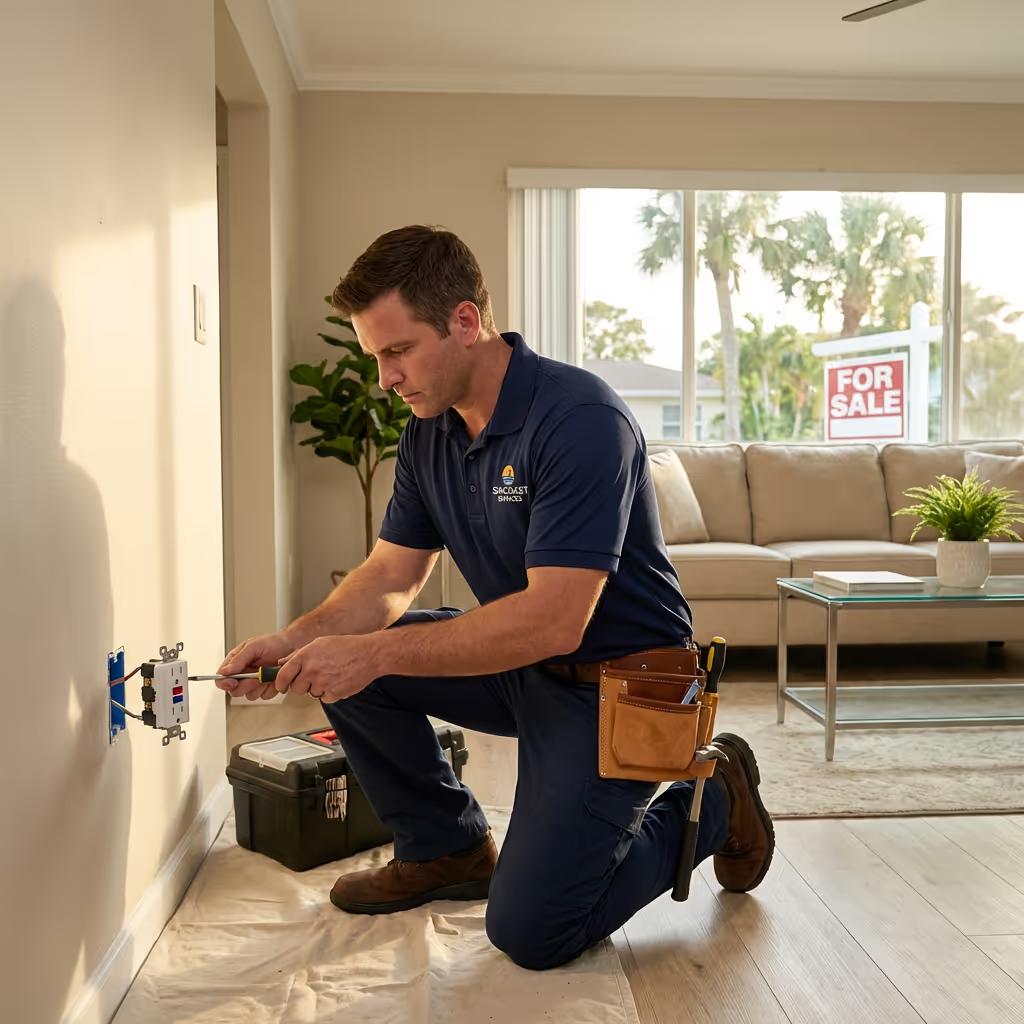
You're getting ready to list your home. Maybe your agent suggested a pre-listing inspection. Maybe the buyer already sent over their inspector's report, and now you're looking at three pages of findings wondering what actually needs to happen before closing.
Either way, you're asking the same question every seller asks: what do I fix, what do I skip, and how do I get it done without blowing my timeline or my budget?
We answer this question every week. Our team at Chad The Handyman, LLC handles home inspection report repairs for sellers across Estero, Fort Myers, Naples, and Bonita Springs. We've worked through hundreds of seller repair lists — from proactive pre-listing fixes to last-minute buyer-demanded repairs with a closing date ten days away.
This guide breaks down which pre-listing home inspection repairs actually matter, which ones you can skip, and how to get your entire seller repair list handled fast by one licensed contractor. Whether you're a proactive seller getting ahead of the inspection or a reactive seller responding to a buyer's report, the framework is the same.
Why Pre-Listing Repairs Give Sellers the Upper Hand
Most sellers wait. They list the home, accept an offer, then hold their breath while the buyer's inspector walks through the property. When the report comes back, the buyer sends a repair request — and suddenly the seller is on the defensive, scrambling to get estimates, negotiate which items to fix, and find a contractor who can finish before closing.
Pre-listing repairs flip that dynamic. When you fix known issues before the first showing, you control the narrative. You set the timeline. You choose the contractor. And you remove the single biggest source of deal friction in residential real estate.
The numbers back this up. According to the National Association of Realtors, home inspection issues are the second most common reason deals fall through after financing problems. In Southwest Florida, where humidity, storm damage, and aging infrastructure create longer inspection reports than the national average, that risk is even higher.
A pre-listing inspection for sellers costs $300–$600. The repairs themselves vary, but addressing them proactively almost always costs less than the price concessions buyers demand when they find the same items during their own inspection. Buyers negotiate emotionally. Sellers who fix proactively negotiate from strength.
The seller's advantage: A clean inspection report at listing signals to buyers that the home has been maintained. It shortens the negotiation cycle, reduces re-inspection requests, and keeps your closing timeline intact. Every week we watch deals close faster when sellers fix issues upfront.
The 3 Categories: Must-Fix, Should-Fix, and Skip
Not everything on an inspection report is equal. Sellers who treat every line item the same end up overspending on cosmetic fixes or underspending on deal-killers. The right approach is to sort every finding into one of three buckets.
Must-Fix — Safety and Code Issues
These are the items that can delay closing, kill financing, or prevent insurance binding. Lenders require them. Insurers flag them. Buyers will not proceed without them. On a pre-listing home repair checklist, these go at the top.
- Missing GFCI outlets — Florida code requires them near every water source. Older homes almost always fall short.
- Non-functioning smoke and CO detectors — Required in every bedroom and on every level of the home.
- Exposed wiring or electrical hazards — Open junction boxes, double-tapped breakers, improper connections.
- Active water leaks — Under sinks, at the water heater, around toilets. Active leaks are mandatory repairs before selling in any contract type.
- Water heater deficiencies — Missing TPR valve, missing strapping (Florida requirement), improper drain line.
- Missing handrails or guardrails — Code violation and liability issue.
- Structural concerns — Significant foundation cracks, roof damage, compromised load-bearing elements. These typically require a specialist evaluation.
Fix every item in this category. No exceptions. These are the home inspection deal breakers that stop transactions cold.
Should-Fix — Functional Repairs That Kill Deals
These aren't safety hazards, but they're legitimate defects — things that don't work as designed. Buyers reasonably expect these to be addressed, and leaving them on the report gives the buyer's agent ammunition to negotiate a price reduction that often exceeds the actual repair cost.
- Running toilets, dripping faucets, slow drains
- Non-functioning outlets, switches, or light fixtures
- Doors that don't latch, stick, or have damaged hardware
- Damaged fascia and soffit (extremely common in SW Florida)
- Torn or sagging screen enclosure panels
- Failed window seals (fogging between panes)
- Drywall cracks and water stains from resolved leaks
- Missing or damaged weatherstripping
These are the repairs that kill deals — not because any single one is a deal-breaker, but because ten of them together make a buyer nervous. A seller who fixes these pre-listing removes that anxiety entirely.
Skip — Cosmetic Items Buyers Expect to Handle
The standard Florida FAR/BAR contract explicitly excludes “Cosmetic Conditions” from repair obligations. That means you are not required to address:
- Paint scuffs, nail holes, and minor wall imperfections
- Discolored grout or caulk (unless it's in a wet area where it allows water intrusion)
- Outdated fixtures that still function
- Minor landscaping notes
- Age observations (“HVAC unit is 12 years old”)
- Maintenance recommendations (filter changes, dryer vent cleaning)
Don't spend money fixing items that buyers expect to customize themselves. If the buyer wants to repaint the living room their preferred shade of gray, that's their project — not your pre-sale expense.
The Most Common Pre-Listing Repairs in Southwest Florida
Florida homes have a different repair profile than homes in the rest of the country. Humidity, salt air, hurricane seasons, and year-round UV exposure create issues that sellers in Ohio or Colorado never deal with. Here are the categories that show up on nearly every pre-listing inspection we handle.
HVAC Maintenance and Repairs
In Southwest Florida, your AC system runs 10–12 months out of the year. That constant use means condensation drain lines clog, filters get neglected, and coils corrode faster than the national average. Inspectors check refrigerant lines, drainage, electrical connections, and overall operation.
The most common HVAC finding on seller inspections here is a clogged or improperly routed condensation drain line. When that line backs up, water ends up in the drain pan — or worse, on your ceiling. A backed-up condensation line is how half the water stains in Florida ceilings get there. Get this serviced before listing.
If your system is over 15 years old, expect the inspector to note the age. That's not a defect — it's an observation. But it will come up in negotiations, and some insurance companies won't bind policies on homes with AC systems past a certain age. Talk to your agent about whether a home warranty or service documentation addresses this adequately.
Plumbing
Water heater age and condition is the most impactful plumbing finding on a seller's report. Florida requires proper TPR valves, discharge pipes, and wall strapping. If your water heater is over 10 years old, inspectors will note the age, and buyers often request replacement or a credit.
Beyond the water heater, we see dripping faucets, running toilets, slow drains, and corroded supply lines on nearly every report. Most of these are quick fixes for a licensed contractor. The key is addressing active leaks before listing — water damage is the fastest way to spook a buyer and trigger a mold remediation conversation nobody wants.
Electrical
Missing GFCI outlets are the number-one electrical finding on Florida inspection reports. The code requires them near every water source — kitchens, bathrooms, garages, laundry rooms, and all exterior outlets. Homes built before 2000 rarely have full GFCI coverage.
Other common electrical findings include non-functioning outlets, outdated smoke detectors (they expire after 10 years, even if they still chirp), double-tapped breakers, and missing cover plates. We handle all of these during a standard inspection repair visit.
Roof and Exterior
In Florida, your roof is both a structural component and an insurance gatekeeper. Insurance companies in Lee and Collier counties have gotten increasingly strict about roof age — many won't bind a policy on a roof over 15–20 years old. If the inspector flags roof damage or significant wear, that's a conversation for a licensed roofer.
What we handle is everything around the roof: damaged fascia and soffit (wood rot from Florida's humidity is epidemic), loose or clogged gutters, deteriorated flashing, and damaged screen enclosures. These exterior items show up on almost every SW Florida inspection and are well within a handyman's scope.
Moisture and Mold Concerns
Florida's year-round humidity makes moisture the silent antagonist of every home sale. Inspectors look for signs of moisture intrusion: water stains on ceilings and walls, musty odors, condensation in unexpected places, and bathroom exhaust fans that vent into the attic instead of to the exterior.
If mold is visible, you're likely looking at a remediation specialist before we can do the drywall repair and painting. But most moisture findings on pre-listing inspections are preventive — caulking failures around tubs and showers, missing weatherstripping that allows humid air infiltration, and bathroom fans that need repair or rerouting. Address these before listing and you remove the mold concern from the buyer's mind entirely.
Drywall, Doors, and Windows
Settlement cracks in drywall are a fact of life in Florida. The sandy soil across Lee and Collier counties allows homes to shift over time, and the drywall shows it. Hairline cracks at corners, along tape seams, and above doorframes are cosmetic — but they still look bad to buyers walking through.
Doors that stick, don't latch, or have gaps at the bottom are the single most common finding on inspection reports nationwide. In Florida, add warped exterior doors from heat exposure and sliding glass door track issues from daily use. Window hardware failures, broken locks, and failed seals (fogged glass) round out the list.
None of these individually kills a deal. But a report with fifteen of them tells the buyer the home hasn't been maintained — and that perception costs you money at the negotiating table.
Fix It, Credit It, or Sell As-Is? How to Decide
In Florida, sellers have three options when inspection findings come up: make the repairs, offer a repair credit at closing, or sell the property as-is. Each option has a place depending on your situation.
Standard Contract vs. As-Is Contract in Florida
Under a standard Florida FAR/BAR contract, the seller is responsible for ensuring major systems are in “Working Condition.” There's a Repair Limit — typically 1.5% of the purchase price — that caps the seller's obligation. On a $400,000 home, that's $6,000. If repairs exceed the limit, both parties negotiate or either can walk.
Under an as-is contract, the seller has no repair obligation. The buyer accepts the property's current condition. However, the buyer retains the right to inspect and cancel during the inspection period. An as-is sale doesn't mean the buyer can't walk — it means you don't have to fix anything if they stay.
When Each Option Makes Sense
Make the repairs when the cost is reasonable (under $5,000–$8,000), you have time before closing, and you want to maintain the widest possible buyer pool. Financed buyers — which represent the majority of the market — need the home to meet lender requirements. Making pre-sale home repairs keeps those buyers in play.
Offer a repair credit when the buyer prefers to choose their own contractor, when specific items are preference-dependent (like fixture style), or when you're short on time. The credit comes off the sale price at closing. It's clean, fast, and avoids the logistics of coordinating repairs during escrow.
Sell as-is when the repair list is extensive and the cost would exceed your budget, when you're in a time crunch (relocation, estate sale, financial pressure), or when the property is priced to reflect its condition. Know that as-is sales typically attract a smaller buyer pool — primarily cash buyers and investors — and the sale price reflects that reduced competition.
ROI on Pre-Listing Repairs
Here's the math that matters: pre-listing repairs typically cost 30–50% less than the price concessions buyers demand when they find the same issues during their inspection. A $3,000 repair list found by the buyer's inspector often turns into a $5,000–$7,000 credit demand — because the buyer builds in a margin for the unknown.
When you fix issues proactively, there is no margin for the unknown. The repair is done, documented, and visible. The buyer's inspector confirms it. That certainty is worth real money at the closing table.
How to Get Your Pre-Listing Repairs Done Fast
Time is the seller's biggest constraint. You want repairs done before the first showing — or, if the buyer's inspection already happened, before the repair deadline in the contract. Here's the fastest path from report to completion.
Step 1: Get Your Inspection Report
Order a pre-listing inspection or review the buyer’s report. This gives you a clear picture of what needs attention before closing.
Step 2: Prioritize With Your Agent
Work with your listing agent to identify must-fix safety items, deal-breakers, and items that aren’t worth addressing. Focus your budget on repairs that prevent deals from falling through.
Step 3: Hire One Licensed Contractor
A licensed handyman handles 80-90% of typical inspection items — plumbing, electrical, drywall, painting, safety items — in one or two visits. One contractor, one schedule, one invoice for closing.
Step 4: Document Everything for Closing
Get a completion report with photos showing each repair. This documentation goes into the closing file and satisfies re-inspection requirements.
Most pre-listing repair lists take 1–3 days to complete. We schedule around your listing date and provide same-day documentation when the work is finished.
For more on who fixes items from inspection reports and which items require a specialist vs. a handyman, that guide covers the full breakdown.
What Pre-Listing Repairs Cost (Realistic Ranges)
Every report is different, but here are the home inspection repair cost ranges we see most often in Southwest Florida. These reflect handyman rates — what you pay when one licensed contractor handles multiple items in the same visit.
| Repair Category | Typical Cost Range |
|---|---|
| GFCI outlet installation (per outlet) | $75 – $150 |
| Smoke/CO detector replacement (per unit) | $50 – $100 |
| Faucet/toilet repair | $75 – $200 |
| Water heater repair (minor) | $150 – $400 |
| Drywall patch and paint (per area) | $75 – $250 |
| Door adjustment/repair | $75 – $200 |
| Fascia/soffit repair (per section) | $200 – $500 |
| Screen panel replacement (per panel) | $75 – $200 |
| Handrail installation | $150 – $400 |
| Caulking/weatherstripping (per area) | $50 – $150 |
Multiple items done in the same visit are typically cheaper per item. Bundling saves on trip charges and reduces total labor time.
For detailed cost breakdowns by category, see our full guide on what inspection repairs cost in Florida.
Typical total for a pre-listing repair project: Light reports (8–10 items) run $800–$1,500. Moderate reports (15–20 items) fall in the $2,000–$4,000 range. Heavy reports with extensive deferred maintenance can reach $4,000–$8,000+. Send us your report for a free, itemized estimate.
Florida Seller Disclosure: What You Must Tell Buyers
Florida is a “caveat emptor” (buyer beware) state, but that doesn't mean sellers can hide known problems. Florida law requires sellers to disclose material facts that affect the property's value — including known defects that are not readily observable.
The distinction matters: known defects vs. latent defects. If you know your roof leaks during heavy rain, you must disclose it — even if the stain has been painted over. If there was a past mold issue that was remediated, you should disclose the remediation. Failing to disclose known material defects exposes you to liability long after the sale closes.
This is where a pre-inspection for sellers actually protects you. Once you've inspected the property, you know what's there. If you fix it, you disclose the repair. If you don't fix it, you disclose the finding. Either way, transparency is your best legal protection in a Florida real estate transaction.
The FAR/BAR contract includes a seller disclosure section where you document known conditions. Your listing agent can walk you through what belongs there. The bottom line: disclose what you know, fix what you can, and document everything.
Frequently Asked Questions
What repairs should I make before listing my home?
Focus on safety items first: missing GFCI outlets, smoke detectors, exposed wiring, water heater issues, and handrail deficiencies. Then address functional defects that kill deals — active leaks, non-functioning fixtures, damaged fascia, and HVAC problems. Skip purely cosmetic items like paint scuffs and minor wall imperfections. A pre-listing inspection gives you a complete picture so you can prioritize.
Should I get a pre-listing inspection before selling?
Yes — in most cases, a pre-listing inspection is one of the smartest moves a seller can make. It costs $300-$600 and lets you control the repair process on your timeline, at your price. You eliminate surprises, remove buyer negotiation leverage, and present a clean report at listing. The exception is if you’re selling strictly as-is to an investor who won’t inspect anyway.
Do I have to fix everything on a home inspection report?
No. Under a standard Florida FAR/BAR contract, sellers must ensure major systems are in “Working Condition” — but cosmetic conditions are explicitly excluded. Under an as-is contract, sellers have no repair obligation at all (though the buyer can cancel during the inspection period). In practice, focus on safety issues, code violations, and functional defects. The rest is negotiable.
Should I sell as-is or make repairs first?
It depends on your situation. Selling as-is is faster and avoids repair hassles, but it typically means a lower sale price and limits your buyer pool (cash buyers and investors). Making pre-listing repairs usually costs less than the price reduction you’d accept on an as-is sale, and opens the door to financed buyers. If the repair list is under $5,000-$8,000 and your home is in a standard price range, repairs almost always produce a better net outcome.
How much do pre-listing home repairs cost?
It varies by scope. Light reports with 8-10 minor items typically run $800-$1,500. Moderate reports with 15-20 items across plumbing, electrical, and exterior fall in the $2,000-$4,000 range. Heavy reports with 25-30+ items can reach $4,000-$8,000 or more. A single licensed contractor handling the full list is almost always cheaper than hiring multiple specialists.
Can a handyman fix home inspection report items?
A licensed handyman handles 80-90% of what appears on a typical home inspection report: plumbing fixtures, electrical outlets and fixtures, drywall, painting, doors, windows, screens, safety items, and exterior repairs. Items that require a specialist include full roof replacement, HVAC system replacement, main sewer line work, and structural foundation repairs. One licensed handyman covering your full list means one schedule, one visit, and one invoice for closing.
Listing Your Home? Get Your Repairs Done First.
Send us your pre-listing inspection report or your buyer's repair request. We'll review every item, tell you what needs fixing and what doesn't, and give you a clear, itemized estimate — no obligation. Most reports are completed in 1–3 days.
Or send your report for a free estimate.
Licensed (CBC-1259887). Insured. Family-owned since 2010. 475+ five-star reviews.
Serving sellers, buyers, and realtors across Estero, Fort Myers, Naples, and Bonita Springs.
Looking for our full checklist? See our complete inspection repair checklist. For an overview of everything we handle, visit our general home repair services page.