Home Inspection Repair Costs in Florida: What Repairs Actually Cost
Serving Estero, Naples, Bonita Springs, Fort Myers, Fort Myers Beach, Sanibel.
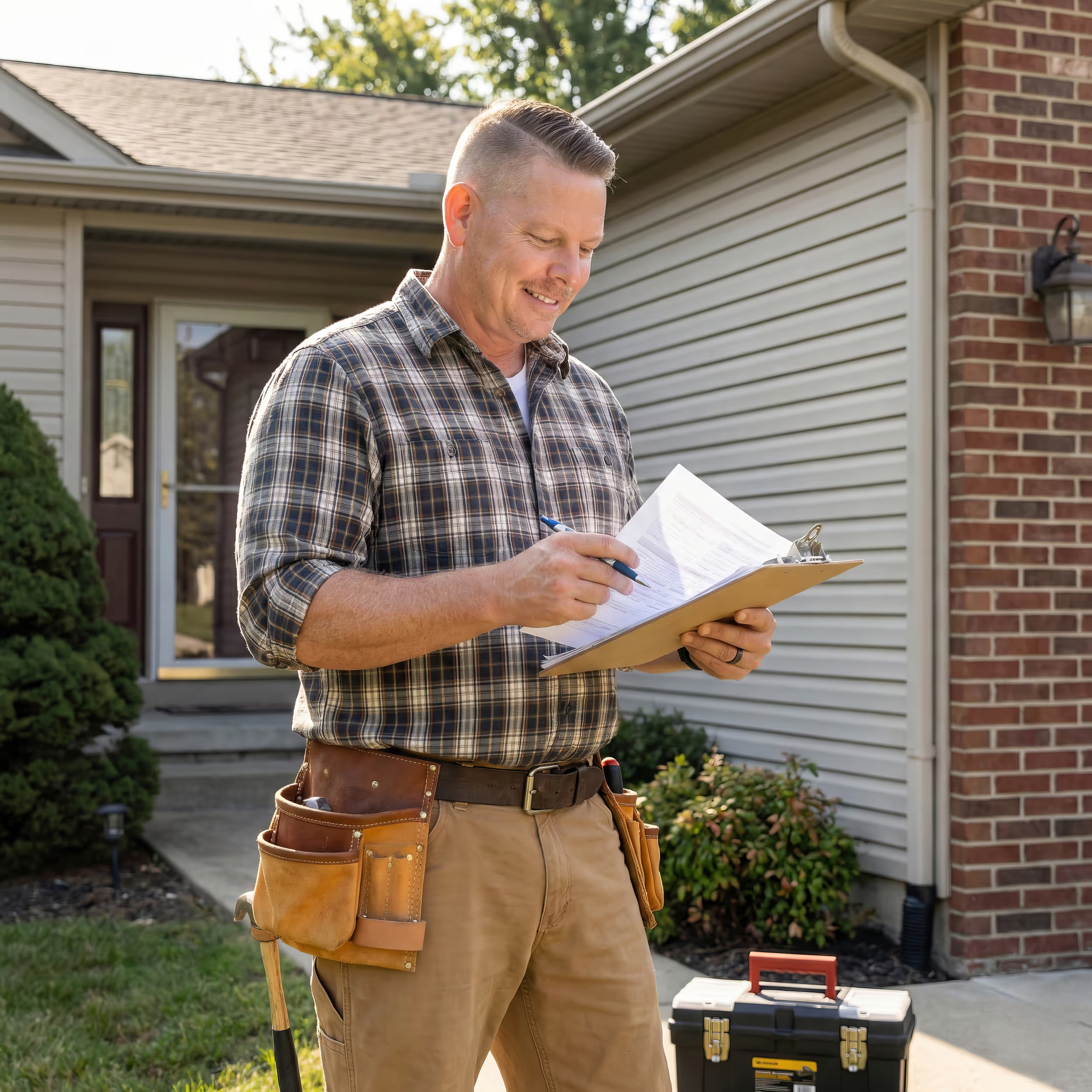
Everyone knows what a home inspection costs. In Florida, you'll pay $300-$600 for the inspection itself. That number is on every real estate blog on the internet.
Nobody talks about what the repairs cost. And that's the number that actually matters. If you're looking up home inspection repair costs in Florida, you want the real answer — not the inspector's fee, but what it costs to fix everything on the report.
You get the report back, it lists 22 items, and now you need a number. Good luck finding that answer online — most results are about the inspection fee, not the repair bill.
We handle home inspection report repairs across Southwest Florida every week. We've gone through hundreds of reports. What follows is based on what these repairs actually cost in SW Florida — not theoretical national averages from a database.
Costs vary. Every report is different. But this will give you a realistic frame of reference before you get an estimate, or help you evaluate one you've already received.
Home Inspection Repair Costs by Category
These are typical ranges for Southwest Florida as of 2026. Your actual costs depend on the scope, accessibility, materials, and whether permits are needed.
Plumbing Repairs
Plumbing items show up on about 13% of inspection reports. Most of them are fixture-level issues, not major pipe work.
| Repair | Typical Cost Range |
|---|---|
| Leaky faucet repair | $75 – $175 |
| Running toilet fix | $100 – $200 |
| Garbage disposal replacement | $200 – $400 |
| Water heater repair (minor) | $150 – $400 |
| Shut-off valve installation | $100 – $250 |
| Fixture replacement (faucet, showerhead) | $150 – $350 |
Electrical Repairs
Electrical findings are the most common safety items on Florida inspections. Missing GFCI outlets alone show up on almost every older home.
| Repair | Typical Cost Range |
|---|---|
| GFCI outlet installation (per outlet) | $75 – $150 |
| Smoke/CO detector installation (per unit) | $50 – $100 |
| Light fixture replacement | $100 – $250 |
| Outlet or switch replacement | $75 – $150 |
| Double-tapped breaker fix | $150 – $300 |
Multiple GFCI outlets done in the same visit are typically cheaper per unit. We upgrade these on nearly every inspection job.
Drywall & Painting
| Repair | Typical Cost Range |
|---|---|
| Drywall patch (small, per patch) | $75 – $200 |
| Drywall repair (larger area) | $200 – $500 |
| Interior painting (per room) | $300 – $600 |
| Touch-up painting | $100 – $250 |
Carpentry & Interior
Door adjustments are the single most common inspection finding nationwide — they show up on roughly 55% of reports.
| Repair | Typical Cost Range |
|---|---|
| Door adjustment/repair | $75 – $200 |
| Trim/molding repair | $100 – $300 |
| Cabinet repair/adjustment | $75 – $250 |
| Handrail installation | $150 – $400 |
| Window hardware repair | $100 – $350 |
Exterior Repairs
Florida's heat, humidity, and storm seasons do a number on the outside of a house. These items come up on almost every SW Florida inspection.
| Repair | Typical Cost Range |
|---|---|
| Screen repair/replacement (per panel) | $75 – $200 |
| Fascia/soffit repair (per section) | $200 – $500 |
| Gutter repair | $100 – $300 |
| Weatherstripping/door seals | $50 – $150 |
| Caulking (per area) | $50 – $150 |
Safety Items
Safety items are the ones that can delay or kill a deal. Lenders may refuse to close. Insurance companies may refuse to bind. These are usually non-negotiable.
| Repair | Typical Cost Range |
|---|---|
| Smoke detector installation (per unit) | $50 – $100 |
| Anti-tip bracket installation (range/stove) | $50 – $100 |
| GFCI outlet (required by FL code near water) | $75 – $150 |
| Handrail/guardrail installation | $150 – $400 |
A note on these numbers: These are handyman rates — what you'd pay when one licensed contractor handles multiple items from your inspection report in the same visit. Individual specialists (a plumber just for the faucet, an electrician just for the outlets) typically charge more per item because you're paying a separate trip charge, minimum service fee, and overhead for each one.
What Affects Home Inspection Repair Costs
Two reports with the same number of items can have very different price tags. Here's what moves the needle:
- Number of items on the report. More items doesn't always mean proportionally more cost. When a contractor handles 20 items in one trip instead of 10, the per-item cost usually goes down. You're paying one mobilization charge, not two.
- Accessibility. A faucet under a sink is a quick fix. The same repair in a tight crawlspace or a three-story foyer ceiling takes longer. If your water heater is crammed in an attic with 18 inches of clearance, that costs more than one sitting in an open garage.
- Materials and finishes. A basic chrome faucet is $80. A brushed nickel pull-down model is $250. The labor is the same — the fixture price is the difference. If you're matching existing finishes, materials cost more.
- Permits. Some repairs require permits in Florida (typically $50-$200+ each). A licensed contractor pulls the permit and handles the inspection. An unlicensed one can't — and unpermitted work can create problems at closing.
- Timeline urgency. If your closing is in 10 days and the report just came back, the schedule is tight. Expedited timelines can affect pricing. We work around closing dates regularly, but the more lead time you give, the better.
- One contractor vs. multiple. Hiring one licensed handyman for the full list is almost always cheaper than hiring four separate specialists. One trip charge, one estimate, one invoice. Not four of each.
Sample Inspection Report Repair Estimates
Every report is different, but these scenarios reflect what we see regularly across Estero, Fort Myers, Naples, and Bonita Springs. They're illustrative — not quotes.
Example 1: Light Report (8-10 items)
- ● 3 GFCI outlet installations
- ● 2 smoke detectors
- ● 1 leaky faucet repair
- ● 2 small drywall patches
- ● Caulking in 2 bathrooms
Estimated total: $800 – $1,500
This is a “clean” report. Mostly safety upgrades and minor fixes. Usually done in a single day.
Example 2: Moderate Report (15-20 items)
- ● Everything in Example 1, plus:
- ● 2 door adjustments
- ● Handrail installation (stairs)
- ● 3 exterior screen panel repairs
- ● Painting touch-ups (2 rooms)
- ● Running toilet repair
- ● Light fixture replacement
- ● Weatherstripping on exterior door
Estimated total: $2,000 – $4,000
The most common range we see. Usually takes 1-2 days depending on scope and accessibility.
Example 3: Heavy Report (25-30+ items)
- ● Everything in Examples 1 and 2, plus:
- ● Fascia/soffit repair (rotted sections)
- ● Cabinet repairs (multiple)
- ● Window hardware repairs
- ● Extensive exterior caulking
- ● Additional electrical work (outlets, switches)
- ● Garbage disposal replacement
- ● Gutter reattachment
- ● Trim and molding repair
Estimated total: $4,000 – $8,000+
Older homes or deferred maintenance. These reports take 2-3 days. The “+” is there because some reports go beyond this depending on scope.
These don't include items that require a specialist — full roof replacement, HVAC system replacement, main sewer line work, or foundation repairs. For a breakdown of what requires a specialist vs. what a handyman handles, see our guide: Who Fixes Items From Home Inspection Reports?
How to Save Money on Inspection Repairs
You can't control what's on the report. But you can control how you handle it.
- Use one contractor for the whole list. This is the single biggest way to reduce your total cost. One trip charge instead of four. Bulk efficiency. One schedule to coordinate. We see buyers save 20-30% compared to hiring individual specialists for each category.
- Prioritize must-fix items. Not everything on the report needs to happen before closing. Safety items and code violations? Non-negotiable. Functional defects? Probably. Cosmetic observations? Those can wait. Our home inspection repair checklist breaks down which items fall into each category.
- Get multiple estimates, but compare apples to apples. Check that each contractor is licensed and insured. The cheapest bid from an unlicensed worker can cost more in the long run if the work fails re-inspection or doesn't meet code.
- Negotiate a credit instead of repairs. Sometimes it makes more sense to negotiate a closing credit and handle repairs on your own timeline after closing. You choose your own contractor, control quality, and remove the time pressure. Talk to your agent about which approach works for your situation.
- Don't skip the license check. In Florida, unlicensed handymen are limited to casual work under $1,000 and can't touch anything structural or safety-related. Unlicensed work can void insurance, fail re-inspection, and cost more to redo. It's not savings if you pay for it twice.
Negotiating Inspection Repairs: Buyer vs. Seller Tips
The inspection report is a negotiation tool. A clear, itemized estimate from a licensed contractor turns a 30-page report into a specific dollar amount — and that's a stronger negotiating position for everyone involved.
If You're the Buyer
Focus your repair request on safety items and code violations. Sellers agree to fix those because they have to — lenders and insurers often require it. A focused list of 10 items that actually matter gets better results than a 40-item kitchen-sink list. Use the itemized estimate to negotiate repairs or a closing credit.
Under the standard Florida FAR/BAR contract, the seller is responsible for repairs up to the Repair Limit — which defaults to 1.5% of the purchase price. On a $400,000 home, that's $6,000. Know your number before you negotiate.
If You're the Seller
Consider getting a pre-listing inspection and fixing items proactively. A clean inspection report removes buyer leverage and speeds closing. It also shows buyers you have nothing to hide — which, in our experience, reduces back-and-forth by weeks.
For Both Sides
A clear, itemized estimate from a licensed contractor strengthens any negotiation position. It replaces vague anxiety with a specific number. And in a negotiation, specific numbers win.
If you're a realtor coordinating repairs for your clients, check out our realtor partnership program. We work with agents across SW Florida and understand the timeline pressure.
Get a Free Estimate for Your Inspection Report
Stop guessing. Send us your inspection report and we'll give you an itemized estimate for every repair we can handle — usually within 24-48 hours. No obligation.
We handle 80-90% of what appears on a typical home inspection report: plumbing, electrical, drywall, painting, carpentry, screens, doors, windows, safety items — one team, one visit, one invoice.
Got Your Inspection Report?
Send it to us. We'll review every item and give you a clear, itemized estimate — so you know exactly what it costs before you commit.
Or send your report for a free estimate.
Licensed (CBC-1259887). Insured. Family-owned since 2010. 450+ five-star reviews.
Frequently Asked Questions
How much does a typical home inspection repair bill cost in Florida?
It depends entirely on the report. A light report with 8-10 minor items might run $800-$1,500. A moderate report with 15-20 items across multiple categories typically falls in the $2,000-$4,000 range. Heavy reports with 25-30+ items can reach $4,000-$8,000 or more. The only way to know is to get an itemized estimate for your specific report.
Who pays for home inspection repairs in Florida?
It’s negotiated between buyer and seller, usually through their agents. Under the standard Florida FAR/BAR contract, the seller is responsible for repairs up to the Repair Limit (default is 1.5% of the purchase price). Under an “As Is” contract, the seller isn’t obligated to fix anything — but the buyer can cancel during the inspection period. In practice, it comes down to the contract type, the market, and the negotiation.
Can I negotiate home inspection repair costs with the seller?
Yes — and a clear, itemized estimate from a licensed contractor is your strongest negotiation tool. Buyers can request repairs, ask for a closing credit, or negotiate a price reduction. Focus on safety items and code violations — sellers are more likely to agree to those. A kitchen-sink list of 40 items gets worse results than a focused request for the 10 that actually matter.
Should I get multiple estimates for inspection repairs?
Getting two or three estimates is reasonable, but compare apples to apples. Check that each contractor is licensed and insured. The cheapest estimate from an unlicensed worker can cost more in the long run if the work fails re-inspection, doesn’t meet code, or isn’t accepted by the buyer’s lender. Also consider whether you’re comparing one contractor who handles the full list versus multiple specialists — the total cost for one licensed handyman covering everything is usually lower than hiring four separate trades.