Drywall Repairs in Southwest Florida
Serving Estero, Naples, Bonita Springs, Fort Myers, Fort Myers Beach, Sanibel.
Quick answer
Most drywall repairs — cracks, nail pops, holes, and texture matching — run about $150–$600 for a single-visit patch; water-damaged sections cost more. Chad The Handyman (CBC-1259887) handles drywall repair for homeowners across Estero, Fort Myers, Naples, and Bonita Springs.
Drywall damage is one of those things that starts small and nags at you every time you walk past it. A crack above the doorframe, a nail pop in the hallway ceiling, a water stain that showed up after last summer’s heavy rains. Individually, none of these are emergencies. But left unaddressed, some of them can develop into bigger problems — and all of them affect how your home looks and feels. Understanding what causes drywall damage in Southwest Florida, and when a repair needs professional attention, helps you make the right call.
Common Types of Drywall Damage in Florida Homes
Southwest Florida’s geography creates drywall issues that homeowners in other regions rarely deal with. Settlement cracks are at the top of the list. The sandy soil throughout Lee and Collier counties allows homes to settle gradually over time, and that movement shows up as cracks along drywall seams, above door frames, and at the junction between walls and ceilings. This is especially common in newer construction — homes built in the 2005 to 2020 building boom across communities in Estero, Bonita Springs, and south Fort Myers are still settling, and hairline cracks are a normal part of that process.
Nail pops are the second most common issue we see. Florida’s temperature cycling — air-conditioned interiors at 72 degrees while exterior walls absorb 95-degree heat — causes framing lumber to expand and contract. Over years of this cycle, nails gradually push through the drywall surface, creating small bumps or circles where the nail head becomes visible. They look minor, but they tend to multiply over time as the house continues its thermal cycling.
Holes from doorknobs, furniture, and everyday accidents are straightforward damage that we repair constantly. Water damage, however, requires more careful attention. Roof leaks after storms, plumbing leaks behind walls, and AC condensation drain issues all cause water staining, soft spots, and potential mold growth in drywall. Florida’s year-round humidity compounds the problem — even small amounts of moisture trapped behind drywall can lead to mold development within 24 to 48 hours.
For a full overview of drywall services including patching, texture matching, and water damage repair, visit our drywall repair service page.
Texture Matching: Why It Matters
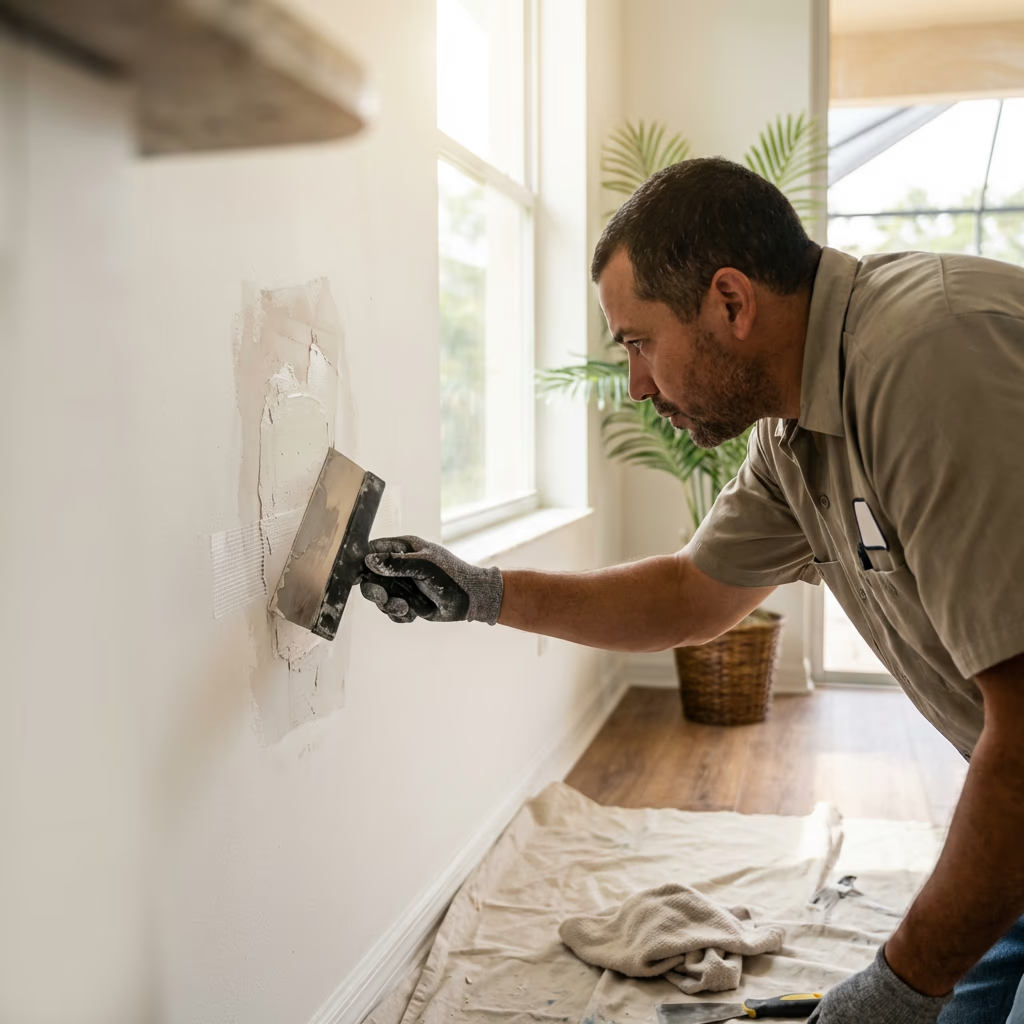
A drywall patch is only as good as the texture match. In Southwest Florida, four standard textures dominate residential construction: smooth, orange peel, knockdown, and skip trowel. Getting the right one — and blending it seamlessly into the surrounding wall — is what separates a professional repair from a visible patch that catches your eye every time you walk by.
Orange peel is by far the most common texture in Estero builder communities like Grandezza, Bella Terra, Corkscrew Shores, and the Wildcat Run neighborhoods. It’s the go-to finish for production builders because it applies quickly and hides minor imperfections in the drywall beneath. Matching orange peel requires the right spray tip, air pressure, and technique, but an experienced repair person can blend a patch area into the surrounding wall without a visible seam.
Knockdown texture is the trickiest to match. The pattern varies depending on who applied it originally — the timing of the knockdown, the thickness of the mud, and the angle of the knife all create subtle differences. Two homes in the same neighborhood, built by the same builder, can have noticeably different knockdown patterns because different drywall crews applied them. This is where experience matters most. We have matched knockdown textures in hundreds of Southwest Florida homes and know how to adjust our technique to blend with the original pattern.
Smooth walls and skip trowel are less common in newer construction but show up regularly in custom homes and older Naples properties. Each requires its own approach, and the key in every case is taking the time to match the existing texture rather than applying whatever is fastest.
When Drywall Damage Is More Than Cosmetic
Most drywall damage is cosmetic — it looks bad but doesn’t affect the structure of your home. However, some types of damage warrant closer investigation before patching.
Water staining is the big one. A brown ring or discolored patch on a ceiling or wall always means water reached the drywall at some point. Before we patch and paint, we need to identify and resolve the source. It could be a roof leak, a plumbing issue above or behind the wall, or a backed-up AC condensation drain — all common in Southwest Florida homes. Patching over an active leak just hides the problem temporarily while the moisture continues to do damage behind the surface.
Mold risk is directly tied to water exposure. In Florida’s humidity, mold can develop on wet drywall within 24 to 48 hours. If drywall feels soft, crumbles when pressed, or shows any green or black discoloration on the back side, the affected section needs to be cut out and replaced — not just patched over. We check moisture levels with a meter before deciding on the right repair approach.
Structural cracks versus cosmetic cracks are another important distinction. Hairline cracks at corners, along tape seams, and above doorframes are almost always cosmetic — caused by normal settling in our sandy soil. But horizontal cracks, stair-step cracks near corners, or any crack wider than a quarter inch could indicate a structural concern that a foundation specialist should evaluate before the drywall is repaired.
DIY vs Professional Drywall Repair
Small nail holes are a reasonable DIY project. A little spackle, a putty knife, some sanding, and touch-up paint can handle holes from picture hangers and small nails. If the wall is smooth-textured and you have matching paint on hand, the results can be perfectly acceptable.
Anything that requires texture matching is where DIY attempts usually fall short. Applying orange peel or knockdown texture requires a hopper gun, compressor, and the muscle memory that comes from doing it hundreds of times. The texture has to match the density, pattern, and scale of the surrounding wall — and it has to be applied at the right consistency and dried at the right rate. A mismatched texture stands out more than the original damage in many cases.
Water damage should always be handled professionally. You need to verify that moisture levels are back to normal, confirm that no mold has started developing, and ensure the water source is resolved before patching. Our most common service combination is drywall repair plus prime and paint in a single visit — we patch the damage, match the texture, let it dry, then prime and paint so you’re left with a finished wall rather than a patch waiting for its next step.
Drywall repair pairs naturally with many of our other general home repair services. Patching, painting, caulking, and trim work often happen together in a single visit.
For tips on choosing interior paint colors and finishes, see our post on painting services — a natural companion to any drywall repair project.
Drywall Repairs and Home Inspections
If you’re buying or selling a home in Southwest Florida, drywall issues are a near-certainty on the inspection report. Settlement cracks, nail pops, water staining, and soft spots show up in the majority of inspection reports we see. Most fall into the cosmetic category, which means they’re negotiable between buyer and seller but don’t typically affect financing or insurance.
Water stains are the exception. An inspector who sees ceiling stains will note them and often recommend further evaluation. If the stain is from an old, resolved leak, we can document that the area is dry, patch it, and paint it. If the stain indicates an active issue, the source needs to be addressed first. Either way, we handle the drywall portion alongside whatever other inspection items are on your list — electrical, plumbing, caulking, hardware — so you’re not scheduling multiple contractors.
We handle drywall items alongside your full inspection repair list. Visit our home inspection report repairs page to see the complete scope of what we address. For cost planning, our home inspection repair cost guide breaks down typical prices by category.
We repair drywall for homeowners throughout Southwest Florida, including Estero, Fort Myers, Naples, and Bonita Springs.
Frequently Asked Questions
How much does drywall repair cost in Estero, FL?
Cost depends on the scope — small nail holes and cracks are straightforward, while large holes, water damage, or full-wall repairs involve more time and material. Texture matching also factors in. We provide free estimates so you know exactly what to expect before we start.
Can you match my existing wall texture?
Yes. We match all standard Florida textures — smooth, orange peel, knockdown, and skip trowel. Orange peel is the most common in Estero communities. Knockdown requires more skill to match since the original pattern varies. We blend the repair area to match your surrounding walls.
Does water-damaged drywall always need to be replaced?
Not always, but often. If drywall is soft, crumbling, or shows signs of mold, it needs to be cut out and replaced. Minor water staining on otherwise solid drywall can sometimes be sealed and painted. The key is addressing the water source first — we always check for moisture before patching.
Do drywall cracks mean my home has a structural problem?
Usually not. Most cracks in Southwest Florida homes are caused by normal settling in our sandy soil, especially in newer construction. Hairline cracks at corners and along seams are cosmetic. However, horizontal cracks, stair-step patterns, or cracks wider than 1/4 inch should be evaluated by a structural professional.
Can you repair and paint drywall in the same visit?
Yes — this is one of our most common service combinations. We patch the drywall, match the texture, prime, and paint in a single visit. This saves you from scheduling multiple appointments and ensures the color and finish match perfectly.