What Tasks Can a Licensed Handyman Do in Florida?
Serving Estero, Naples, Bonita Springs, Fort Myers, Fort Myers Beach, Sanibel.
Quick answer
A licensed Florida contractor can handle drywall, painting, minor electrical and plumbing repairs, carpentry, fixture installs, and most general home repairs — with no scope cap the way unlicensed handymen face under Florida's $1,000 threshold. Chad The Handyman (CBC-1259887) serves homeowners across Estero, Fort Myers, Naples, and Bonita Springs.
Have a specific task in mind? Call (239) 880-2423 or get a free written estimate.
One of the most common questions we get at Chad The Handyman is simple: “Can you handle this?” The answer is usually yes — but not always. A licensed handyman covers a much wider scope than most homeowners expect, and being upfront about where that scope ends is just as important as what's included. Transparency about what we do and don't take on is part of the reason we've earned 475+ five-star reviews from homeowners across Southwest Florida.
This post breaks down exactly what a licensed handyman handles in Florida, organized by trade. For each category, you'll see the specific tasks we perform and the specific tasks that need a specialist. For background on why licensing matters in the first place, see our related post: Do Handymen in Florida Need a License?
What a Licensed Handyman Covers in Florida
A handyman with a CBC (Certified Building Contractor) or CGC (Certified General Contractor) license can perform work across virtually every residential trade. That multi-trade capability is the core value proposition: one contractor handles electrical, plumbing, drywall, carpentry, painting, exterior work, screens, doors, windows, and more — all under a single license, a single visit, and a single invoice. For homeowners with a to-do list that crosses four or five categories, this eliminates the need to hire separate specialists for each trade. For anyone going through a real estate transaction, it means your entire home inspection report can be handled by one team instead of four to six different contractors.
Visit our general home repairs page for the full service overview. If you're specifically dealing with a home inspection, our home inspection report repairs page explains how we handle those start to finish.
The key distinction is this: we work on existing systems. We repair, replace, upgrade, and maintain. We don't build new additions, don't do new construction, and we refer out when the project requires it. That boundary isn't a limitation — it's what allows us to stay focused on the work that homeowners need most, and to do it efficiently. A typical residential to-do list or inspection report is 80-90% repair and replacement work. That's our lane.
Electrical Tasks
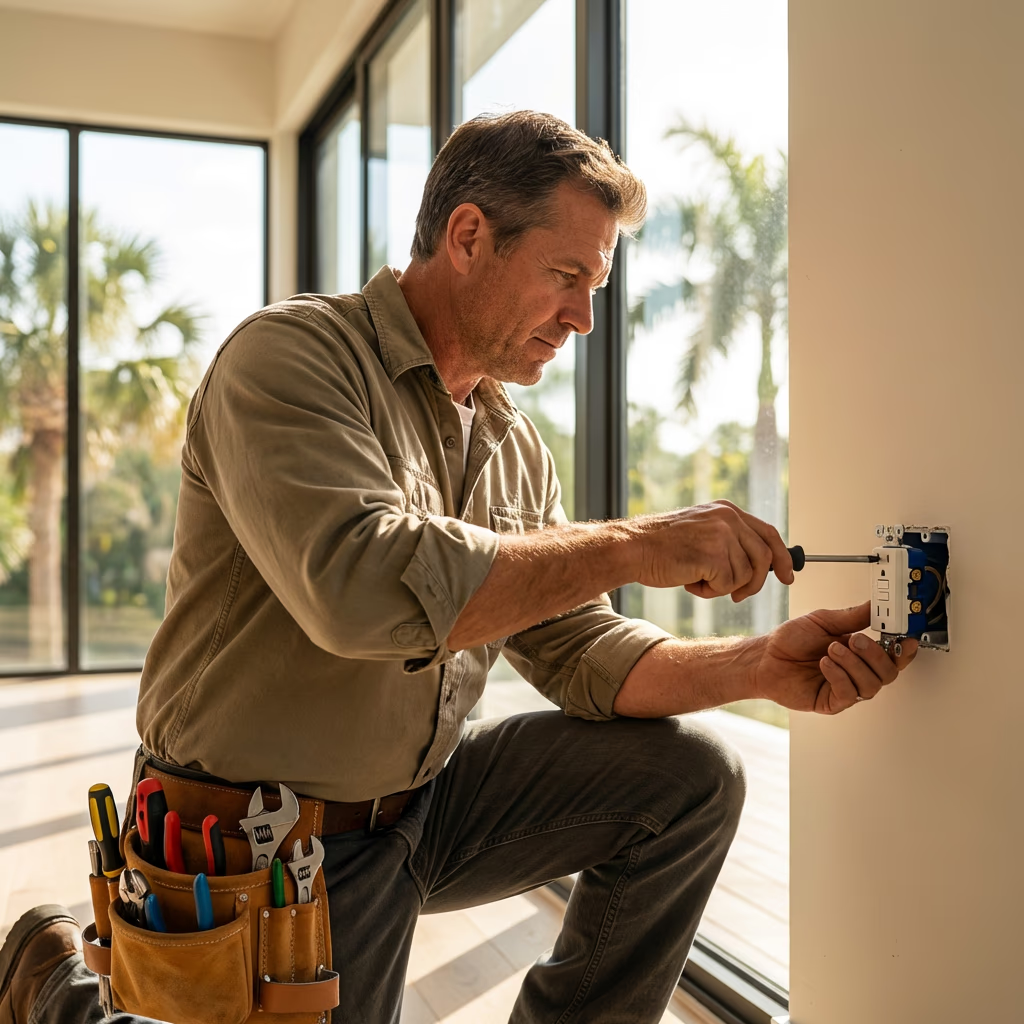
Electrical work is one of the most common categories on both homeowner to-do lists and home inspection reports. Our electrical services cover a wide range of fixture-level and device-level work. Specifically, we handle GFCI outlet installation and upgrades, standard outlet and switch replacement, ceiling fan installation and replacement, light fixture installation (vanity lights, chandeliers, under-cabinet lighting, recessed lighting), dimmer switch installation, smoke and carbon monoxide detector replacement, outlet and switch cover plate replacement, troubleshooting non-functioning outlets, and wiring for ceiling fan and light combinations.
What we don't do on the electrical side: electrical panel upgrades or replacements, adding new circuits to the panel, whole-house rewiring, any work that requires pulling an electrical permit with the county, and generator installation or hookup. These tasks go to a licensed electrician — and we're happy to refer you to trusted local electricians we work with regularly. There's no gray area here. If it involves the panel, new circuits, or permit-level work, it goes to an electrician. If it's fixture-level or device-level work on existing circuits, we handle it.
Practical note: GFCI outlets, ceiling fans, and smoke detectors are the three most common electrical items on SW Florida home inspection reports. We handle all three. If your report lists six GFCI outlets, two ceiling fans, and four smoke detectors, that's a single visit — not three separate trade calls.
Plumbing Tasks
Our plumbing repair services cover the fixture-level and supply-level work that makes up the majority of residential plumbing needs. We handle faucet replacement (kitchen, bathroom, and utility), toilet repair and replacement, garbage disposal installation, shut-off valve replacement, supply line replacement, water heater maintenance items (TPR valve, drain pan, strapping), slow drain clearing, caulking around tubs, sinks, and showers, showerhead and fixture upgrades, and hose bib replacement. This covers what shows up on most homeowner to-do lists and home inspection reports.
What we don't do on the plumbing side: full house re-pipes (especially polybutylene replacement), sewer line repair or replacement, full water heater replacement (we refer to plumbers for this), work that requires opening walls to access main drain lines, and anything requiring a plumbing permit. These go to a licensed plumber. For homes with polybutylene pipes — common in 1980s and 1990s construction throughout Lee and Collier County — we coordinate with trusted plumbers for the re-pipe and handle the related repair work (drywall, paint, trim) after the plumber finishes. That coordination is something we do regularly, and it keeps the homeowner from having to manage multiple contractors independently.
Practical note: The most common plumbing items on SW Florida inspection reports are leaking faucets, running toilets, missing shut-off valves, and water heater strapping. We handle all four in a single visit as part of a broader inspection repair list.
Drywall, Painting, and Interior Work
This is purely “what we do” territory — no exclusions needed. Interior work is one of our highest-volume categories, and it's where the multi-trade advantage shows up most clearly. We handle drywall hole repair (any size), drywall crack repair, water damage drywall replacement, texture matching (orange peel, knockdown, smooth, and skip trowel), priming and painting, accent walls and full room painting, baseboard and trim installation and replacement, shelving installation, picture and mirror hanging, cabinet hardware replacement, closet organization systems, interior door adjustments (sticking, squeaking, not latching), and weatherstripping. Visit our drywall repair page for more detail on that specific service.
We match all four standard Florida wall textures — orange peel is the most common in Estero builder communities like Coconut Point, Grandezza, and the Villages of Estero. Knockdown texture is prevalent in older Naples and Fort Myers homes. Getting the texture match right matters because a visible mismatch between the patch and the surrounding wall is the hallmark of a rushed repair. We take the time to blend it properly.
Drywall plus paint in a single visit is one of our most requested combinations. Whether it's a water-damaged section of ceiling that needs to be cut out, re-hung, textured, primed, and painted, or a set of nail holes and scuff marks before a home goes on the market — the ability to handle both trades in one trip saves homeowners time, money, and the hassle of coordinating separate contractors. For inspection reports, interior items like drywall cracks, nail pops, and damaged trim are standard line items that we address alongside everything else on the list.
Exterior and Outdoor Tasks
Exterior work in Southwest Florida is a category of its own because the climate demands constant attention to the outside of the home. We handle screen panel replacement and full rescreens, door repair and installation including sliding glass doors, hurricane shutter installation, deck repair and maintenance, fascia and soffit repair and replacement, exterior caulking and weatherproofing, gutter cleaning and minor repairs, pressure washing, exterior painting and touch-ups, fence repair, mailbox installation, and outdoor fixture installation.
What we don't do on the exterior side: full roof replacement or major roof repair (that goes to a roofing contractor), tree removal (arborist), irrigation system installation or major repair (irrigation specialist), and major landscape construction such as hardscaping or retaining walls over four feet. These require trade-specific specialists with their own licensing and equipment. We handle everything else on the exterior — which, for most homes, is the majority of what needs attention.
We serve communities across Estero, Naples, Bonita Springs, and Fort Myers. Whether it's a lanai rescreen in Pelican Landing, fascia replacement in Bonita Bay, or exterior caulking on a Cape Coral canal home, our team handles exterior maintenance and repair across the full range of Southwest Florida properties.
Practitioner's note: One of the most common exterior projects we see: fascia rot on south- and west-facing sides of homes in Lee County. The combination of UV exposure and afternoon thunderstorms breaks down wood fascia faster than anywhere else we've worked. If your fascia is original and the home is 10+ years old, check those sun-exposed sides first.
Got a List of Home Repairs?
Send us your to-do list or home inspection report. We'll tell you exactly which items we handle, which need a specialist, and give you a clear estimate for our portion. One team, one visit, one invoice.
Or send your list for a free estimate.
Licensed (CBC-1259887). Insured. Family-owned since 2010. 475+ five-star reviews.
Frequently Asked Questions
What can a licensed handyman do in Florida?
A licensed handyman with a CBC or CGC license can perform work across virtually every residential trade — electrical repairs, plumbing fixes, drywall patching and painting, carpentry, door and window repairs, screen replacement, exterior work, and much more. The key is that we work on existing systems: repairs, replacements, upgrades, and maintenance. Full system replacements (new roof, new HVAC, whole-house re-pipe) and new construction go to specialists.
Can a handyman do electrical work in Florida?
A licensed handyman can handle electrical work on existing systems — GFCI outlet upgrades, ceiling fan installation, light fixture swaps, dimmer switches, smoke detector replacement, and outlet/switch replacements. Work that involves the electrical panel, adding new circuits, or whole-house rewiring requires a licensed electrician. Our CBC-1259887 license covers all common residential electrical repair and replacement tasks.
Can a handyman do plumbing work in Florida?
Yes, a licensed handyman handles most fixture-level plumbing — faucet replacement, toilet repair, garbage disposal installation, shut-off valves, supply lines, and showerhead upgrades. Whole-house re-pipes, sewer line work, and full water heater replacement require a licensed plumber. We handle the plumbing tasks that show up on most to-do lists and home inspection reports.
What does a handyman NOT do?
A responsible, licensed handyman is transparent about scope limits. We don’t do full roof replacement, HVAC system replacement, whole-house re-pipes, electrical panel upgrades, structural modifications, gas line work, or tree removal. These require trade-specific specialists. We handle the other 80-90% of what homeowners need — and we’re happy to refer trusted specialists for anything outside our scope.
How much of a home inspection report can a handyman fix?
A licensed handyman typically handles 80-90% of a standard home inspection report. The items we address include GFCI outlets, smoke detectors, plumbing fixtures, drywall repairs, door adjustments, screen repairs, caulking, exterior work, safety items, and more. The 10-20% that goes to specialists usually involves the roof, HVAC system, or whole-house plumbing — and we coordinate with those specialists to keep the process simple for the homeowner.